
It is Monday morning, checkout time at Grand Hotel Viljandi, and a German festival goer with his wristband still on hands back his room card and asks what a double costs. Not for tonight, he specifies, for the same weekend next July, when Viljandi Folk comes round again, and preferably the very same room he has just spent four nights in. The receptionist explains that the system will not take a booking more than 11 months out. He takes this badly. He has plainly been turning it over for a while, perhaps since Thursday’s wild folk dances, perhaps during the downpour on Sunday night just before the grand finale, and now there is nothing to be done with the thought except carry it home.
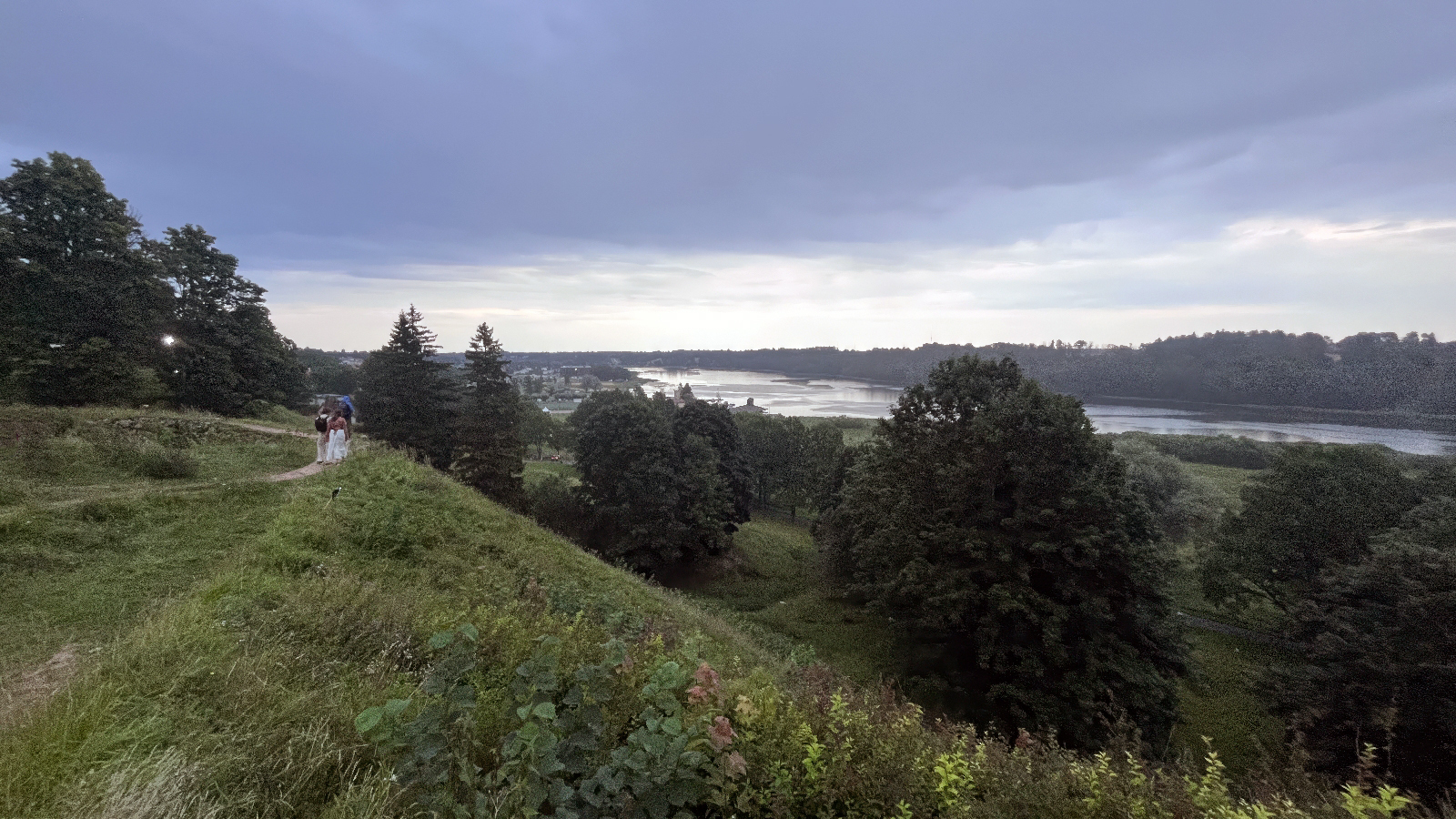
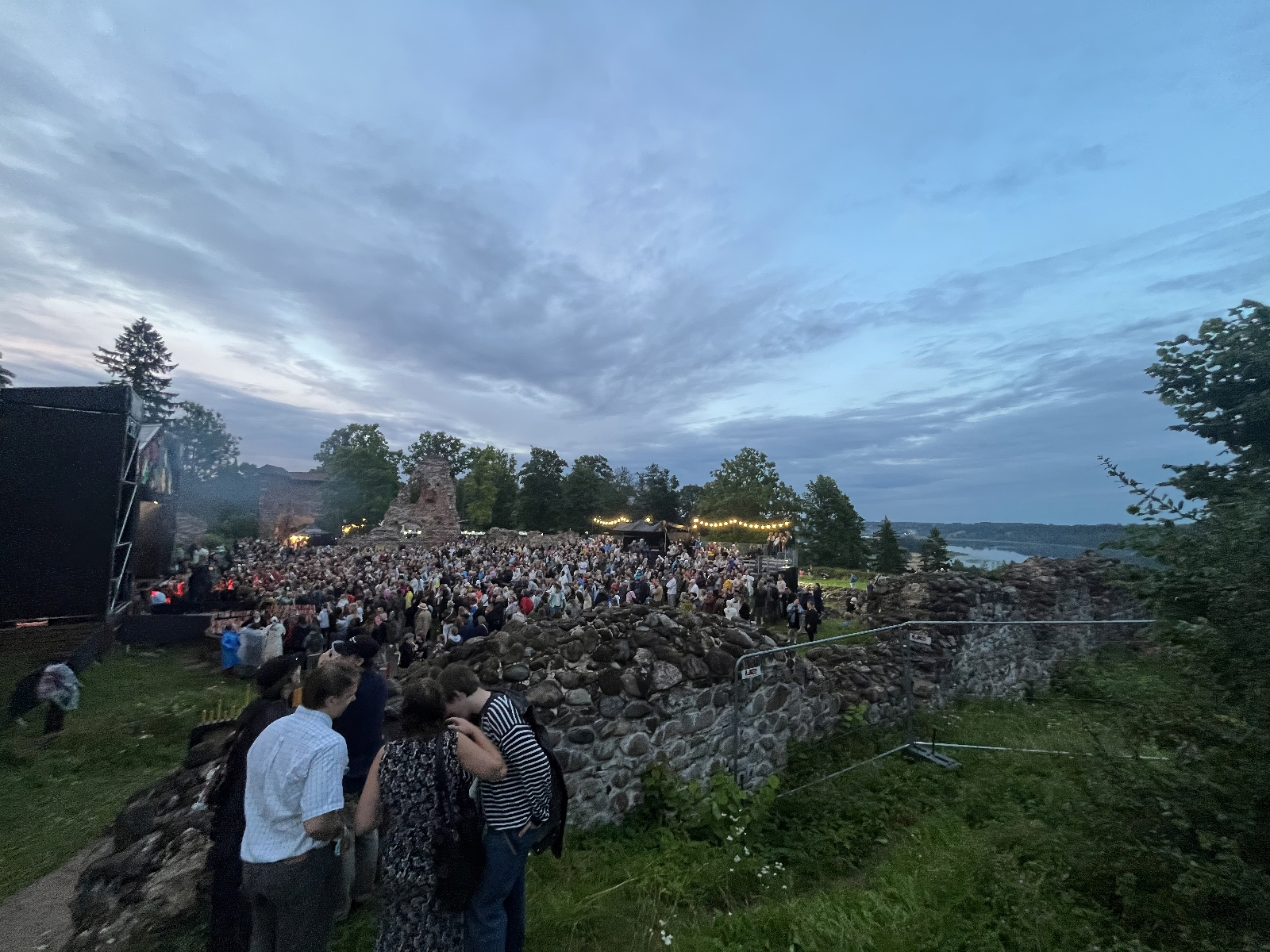
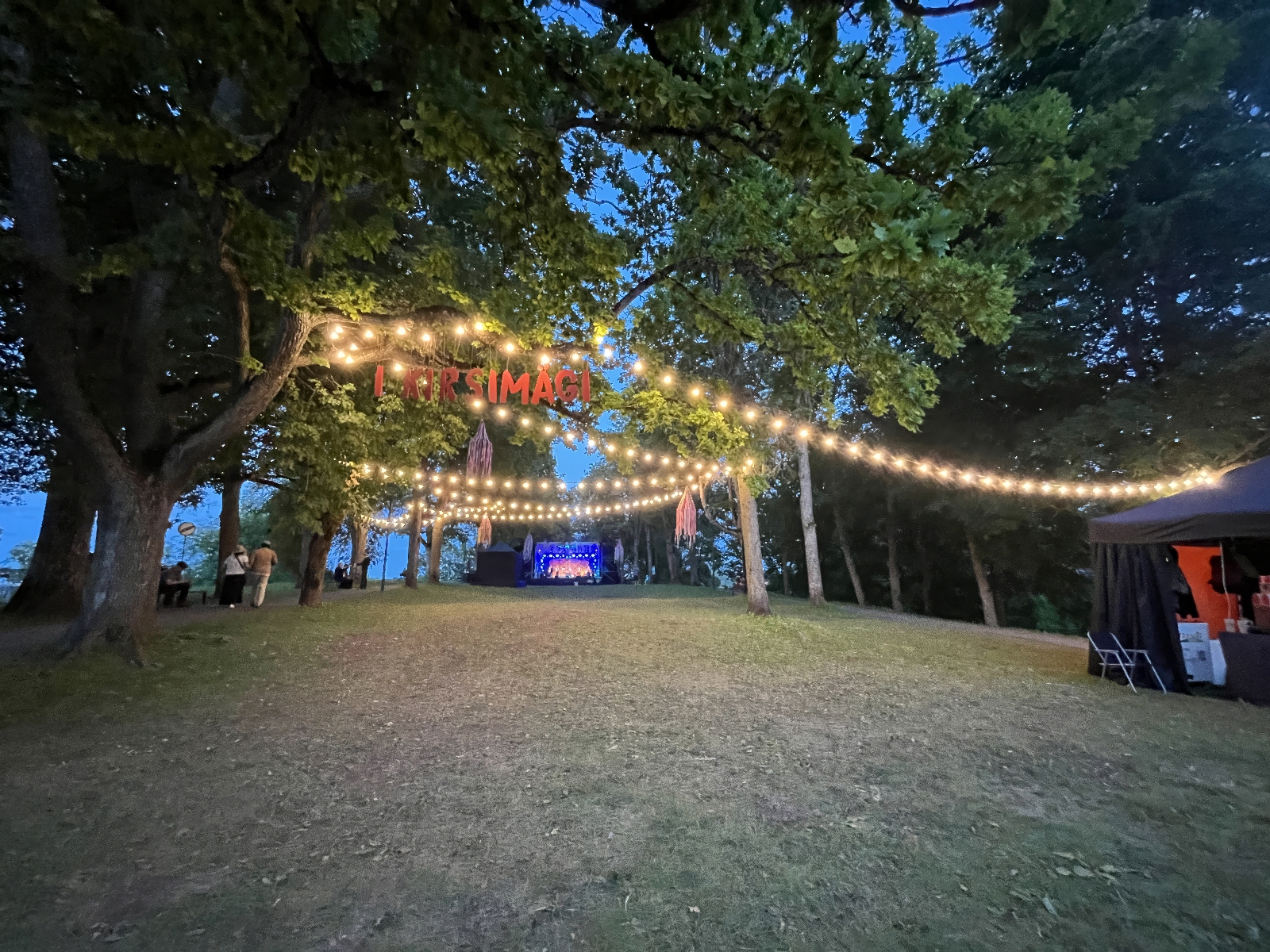
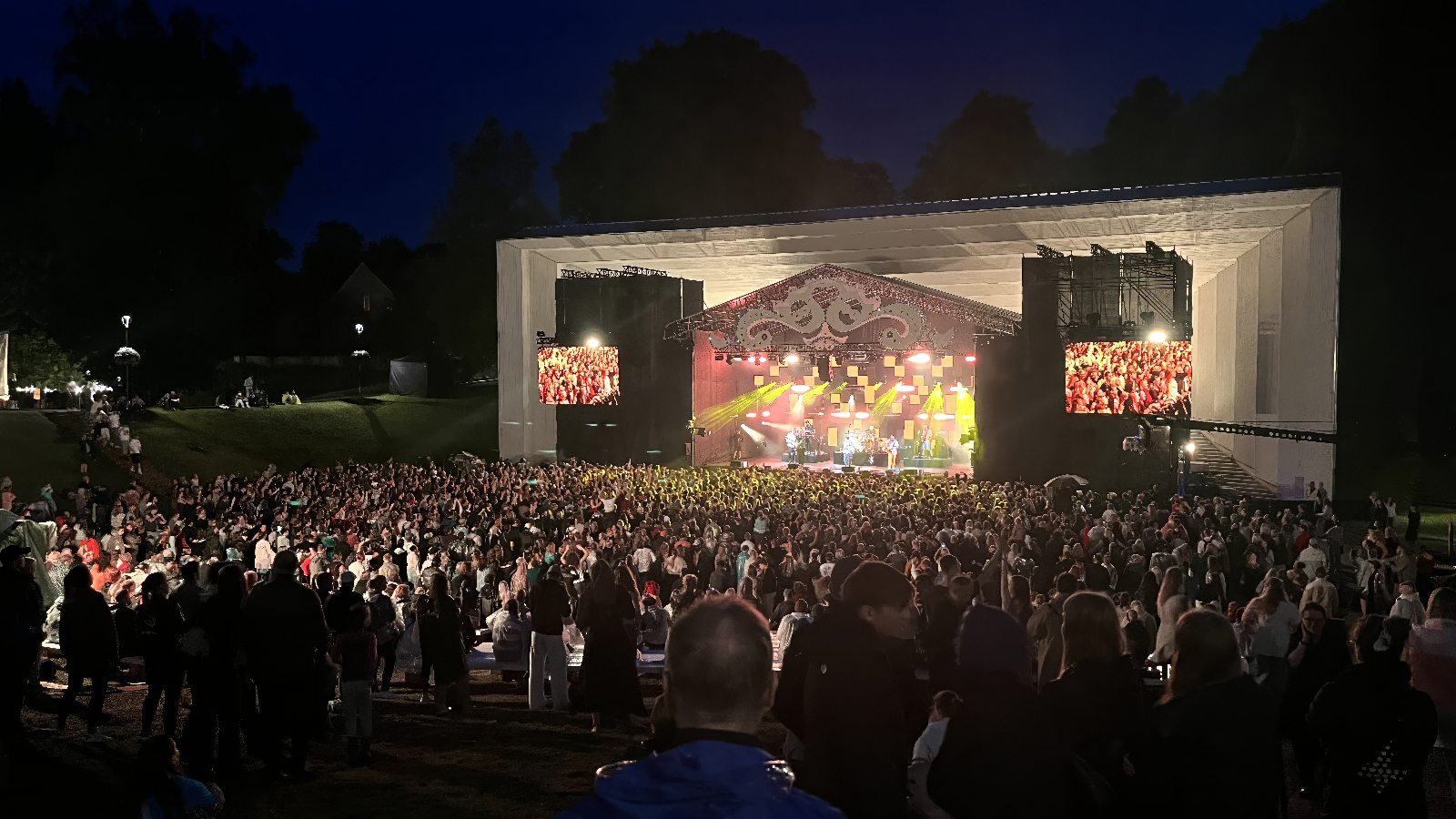
That is a fairly standard state to leave Viljandi in. The town has something to do with it. Seventeen thousand people live on a ridge above a long glacial lake in southern Estonia, forest running down to the water on the far shore and the ruins of a 13th-century Livonian Order castle at the centre, the ground falling away in wide grass terraces cut by deep ravines. Those terraces are the festival: four outdoor stages sitting in the folds of the hills, Kaevumägi (Well Hill) at the top, the two Cherry Hills (Kirsimägi I & II) below it, and the Song Festival Grounds down on the flat. Two indoor rooms handle the rest: the Traditional Music Centre beside the ruins, the Ait or granary as locals call it, and the Sakala Centre in town, carrying the quieter programme by day and the wilder dances by night. Everything is ten minutes’ walk from everything else. To cross between Kaevumägi and the ruins you take the suspension bridge, 50 metres of it slung over a 13-metre trench and still swaying under everyone who steps on. Black sheep graze the slopes throughout, unbothered by any of it.
And the festival is not only up on the ticketed grounds. It spills straight down into the old town, where two free stages run from lunchtime to eleven at night across all four days: the Green Stage on Laidoneri Square, where the dance schools set out workshops so anyone can learn the steps, and Sõprade Hoov on Lossi Street, a village-party yard open to any musician who fancies a turn. Seventy concerts happen out here, matching the paying stages exactly, strung along a street lined with a craft and design market where nobody checks a wristband. The programmed players are only half of it. Buskers of every age sprout across town, under gazebos and on pavements, some barely tall enough to hold the instrument, playing to whoever slows down.
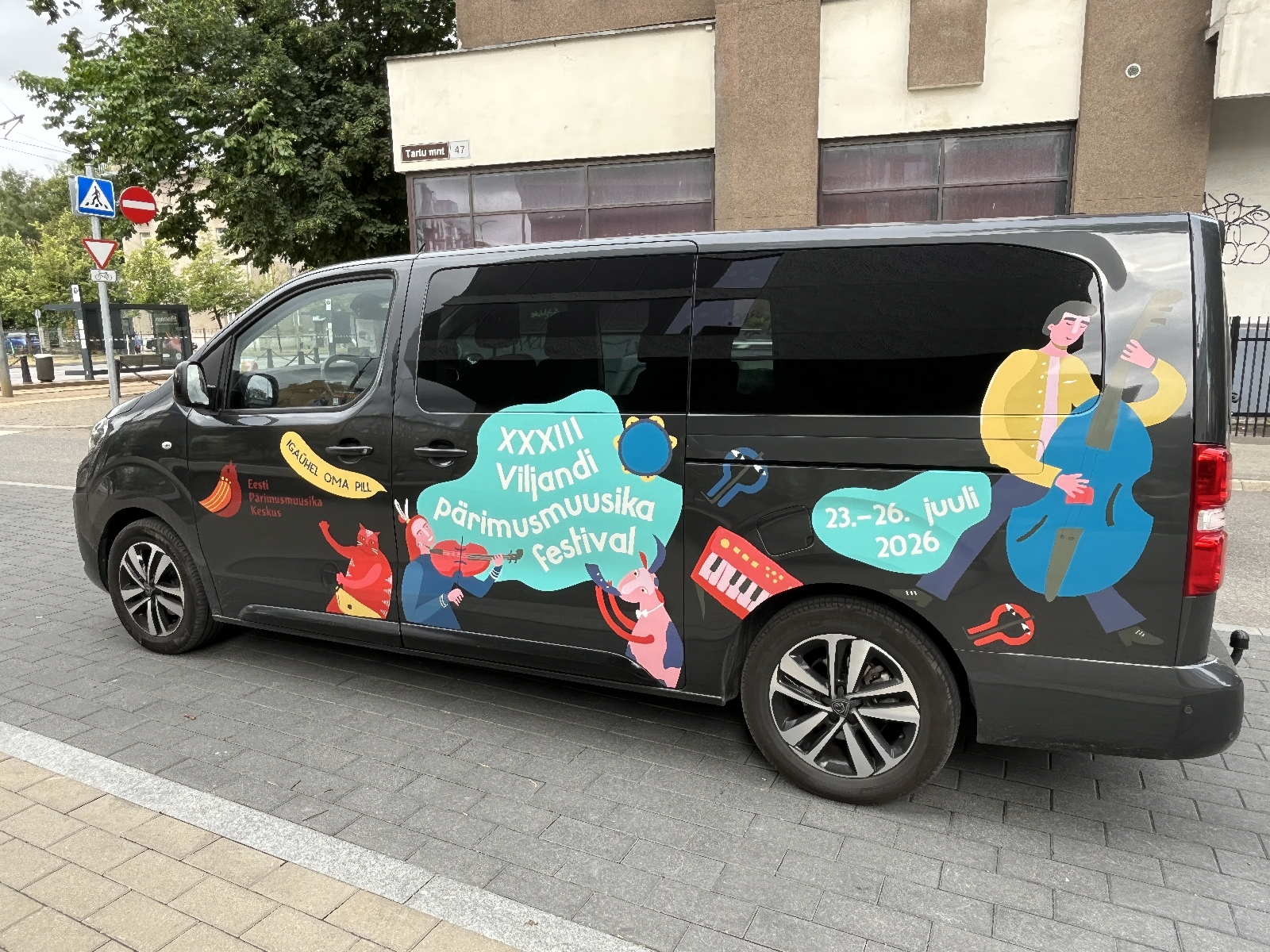
What carries across those slopes, alleyways and squares is pärimusmuusika, a word the English ‘folk’ flattens badly. For four days in late July this town does not commemorate its traditions so much as live inside them and shove them somewhere new. Most of what you hear sits on archival foundations: village fiddle tunes, bagpipe repertoire, regilaul runic song, the older Estonian and Finno-Ugric layers that were collected, catalogued and came within a generation of vanishing. Yet none of it is handled as museum material. This year’s theme, ‘To Each Their Own Instrument,’ was taken literally. Stages were packed with uncommon, traditional instruments most people couldn’t name, and within a day half of them were queuing to try one.
Inside the Ait, the festival kept a second timetable. On three of the four nights, Thursday, Friday and Saturday, its great hall turned into Tantsumaja, the dance house, running from around 11pm until three or four in the morning while a rotating cast of folk musicians kept the tunes coming in relay. What happened on the floor was not a taught routine so much as a shared fluency: circles and couples moved through the room side by side, skill levels visibly ranging from a first attempt to real virtuosity, yet the general standard stayed remarkably high, dancers who had grown up on this repertoire picking out the shape of a tune they had never heard before and finding the steps inside it before the first verse was out.
It all began, as it always does, with the parade winding through town on the Thursday early afternoon, before mayor Jaak Pihlak handed the ceremonial key to festival chief Ando Kiviberg, who has run this since its first edition in 1993. Just over 7,000 people came through the gates across that afternoon and evening, more day-one pass buyers than last year.
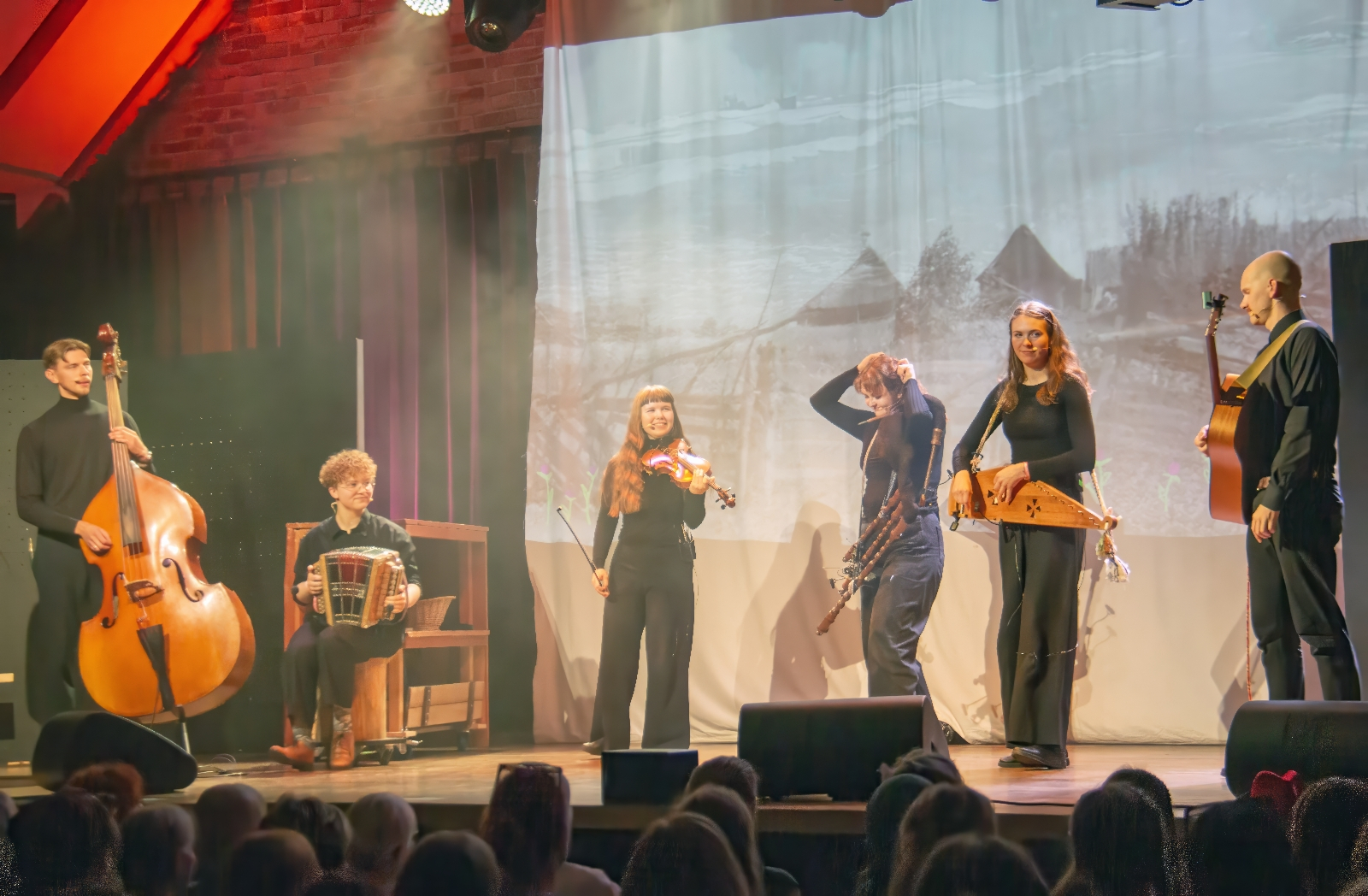
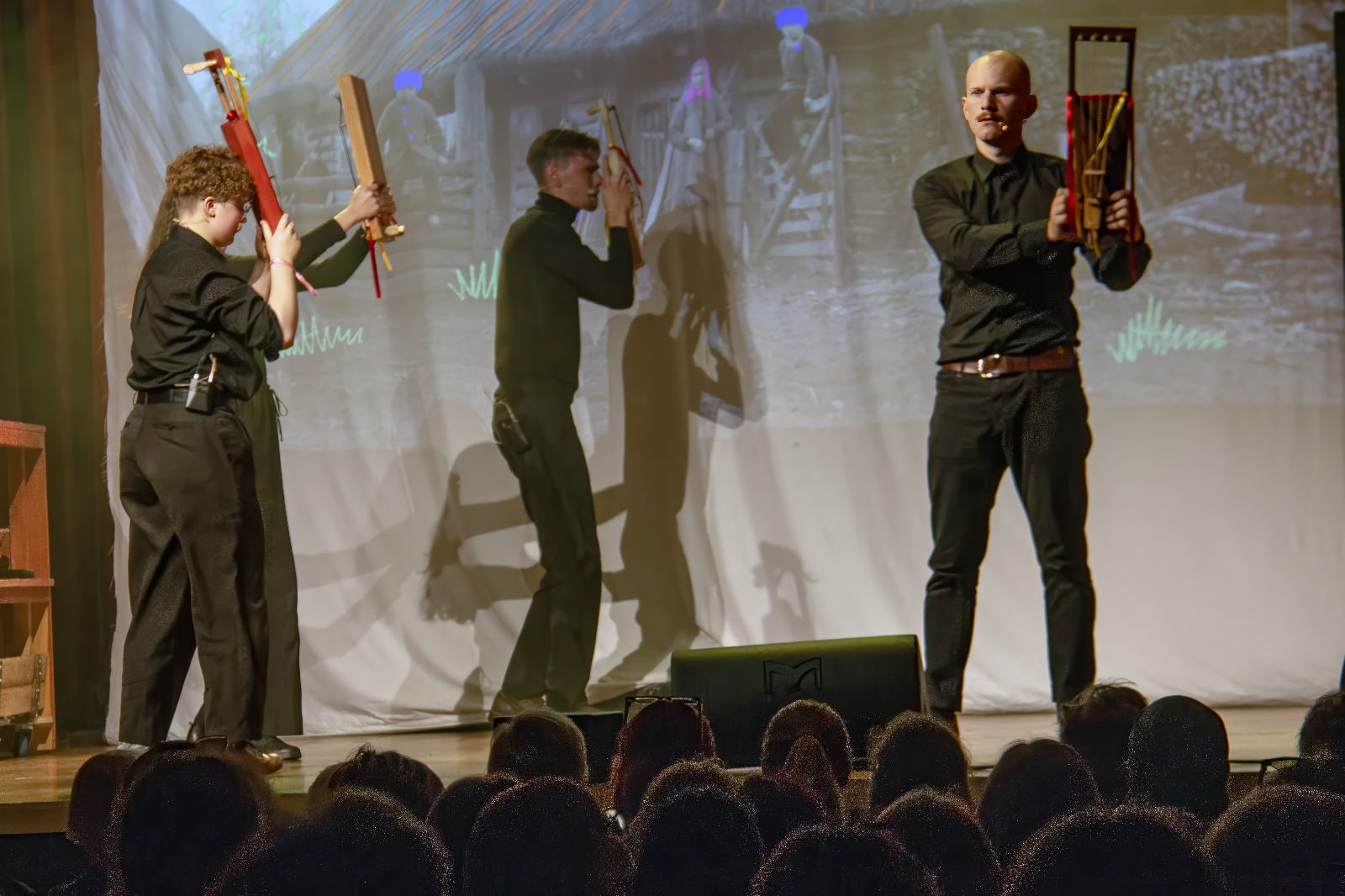
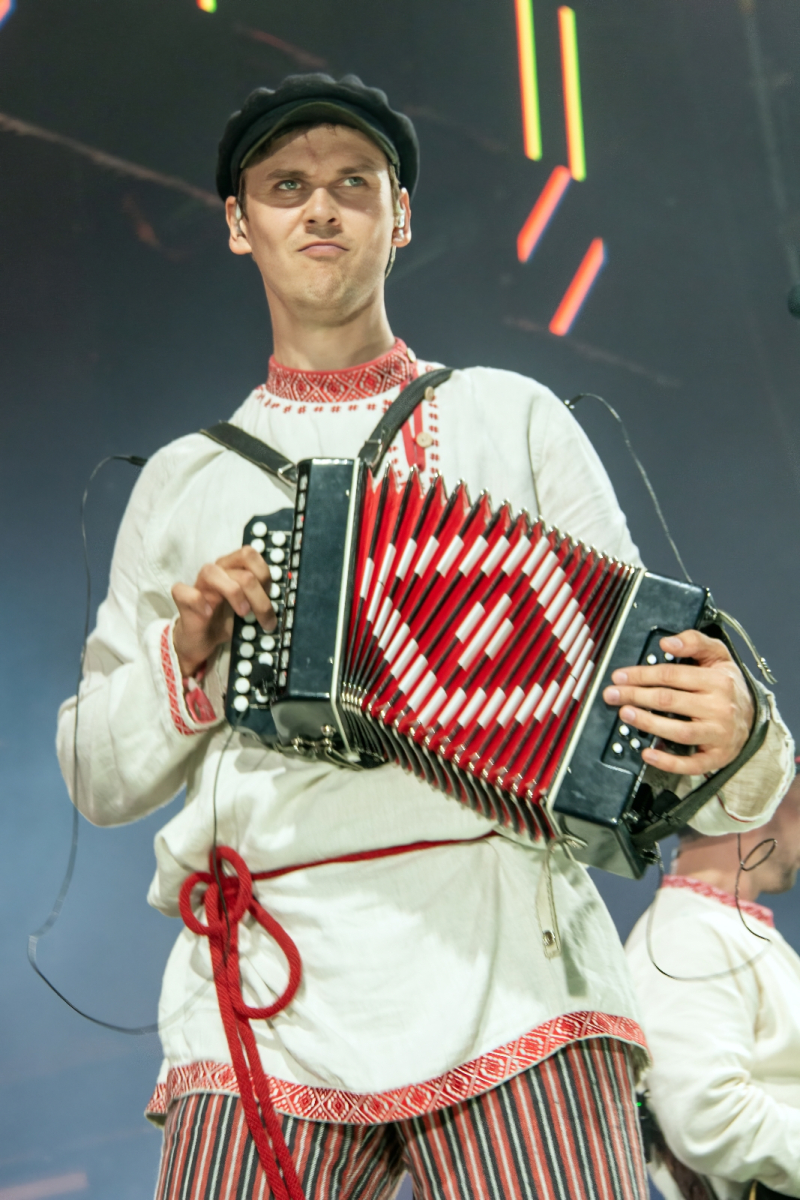
In the Ait, six students turned the theme into a play, To Each Their Own Instrument, staged by director Lee Taul with a cast drawn from the Viljandi Culture Academy, the Estonian Academy of Music and Theatre and Tartu’s Eller college. Bagpipe, kannel and Teppo-type accordion were carried through the story by players still young enough to be studying them, the archive walking and talking rather than sitting in a case. The same idea took physical form a few streets over, on Pikk Street beside St John’s Church, where Pilliküla opened to the public for the first time: an ‘instrument village’ of close to 80 free workshops where anyone could sit down with a teacher and coax a first note out of a kannel, a bagpipe, a jaw harp, a fiddle, a talharpa or an accordion. “Musical heritage lives on as long as playing an instrument is common enough among the people,” Kiviberg said of the idea behind Pilliküla, the point being that a tradition survives by being played, not preserved. You could see the results all over town that weekend. Children busked on the hills and street corners with whatever they could play, one girl of maybe twelve and her violin set up between two stages with her case open for coins, taking more by evening than some of the market stalls.
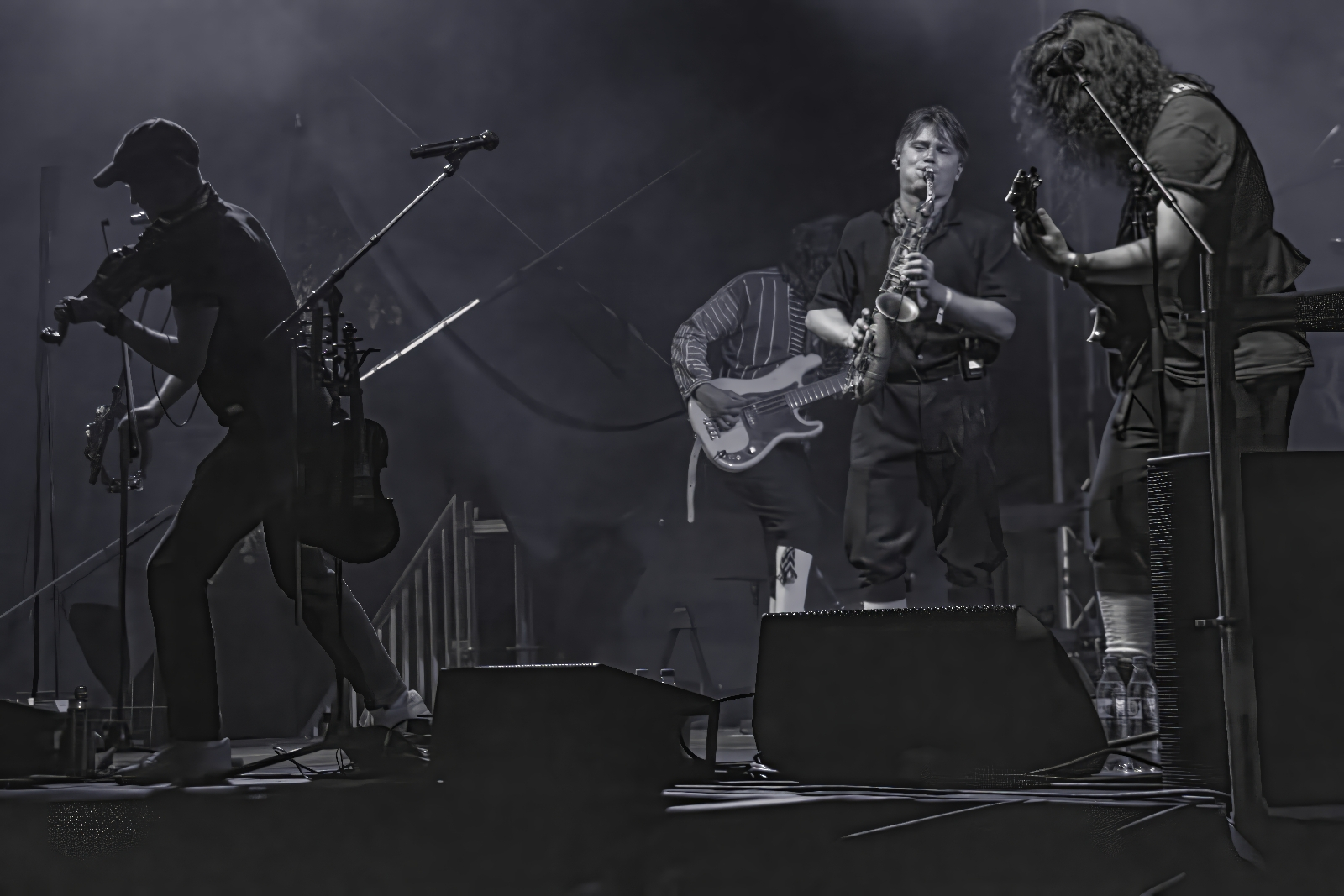
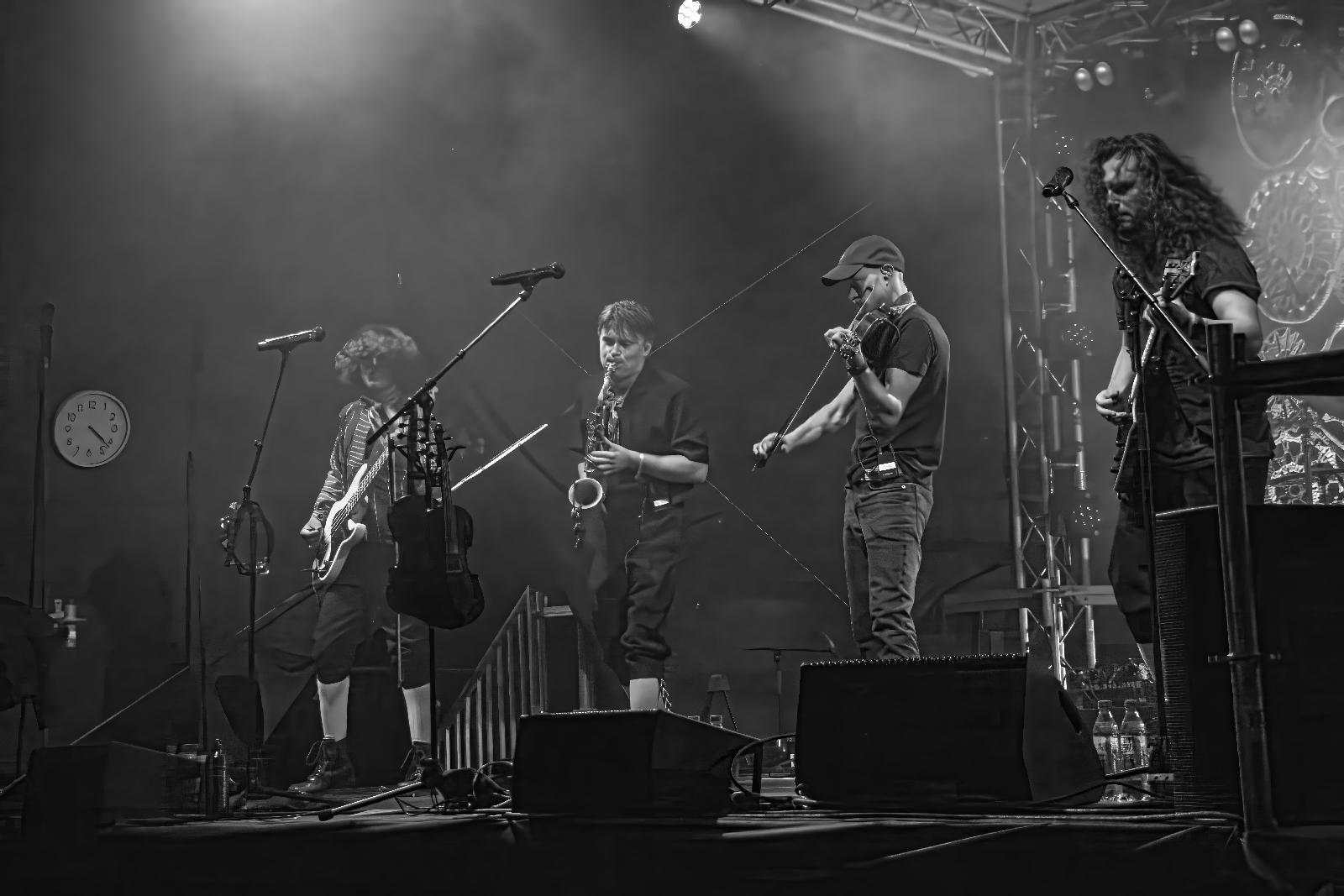
Up on the stages, the theme got loud. On II Kirsimägi that first afternoon, Gangar dug century-old dance tunes out of Norway’s national archives and ran them through a rock band. The Oslo five-piece build off springar and gangar rhythms, the old triple-time and walking dances they take their name from, Hardanger fiddle ringing over a rhythm section that a rhythm section hammering underneath, and drive the lot flat out. They played here in 2022, so they knew the crowd would dance, and it did.
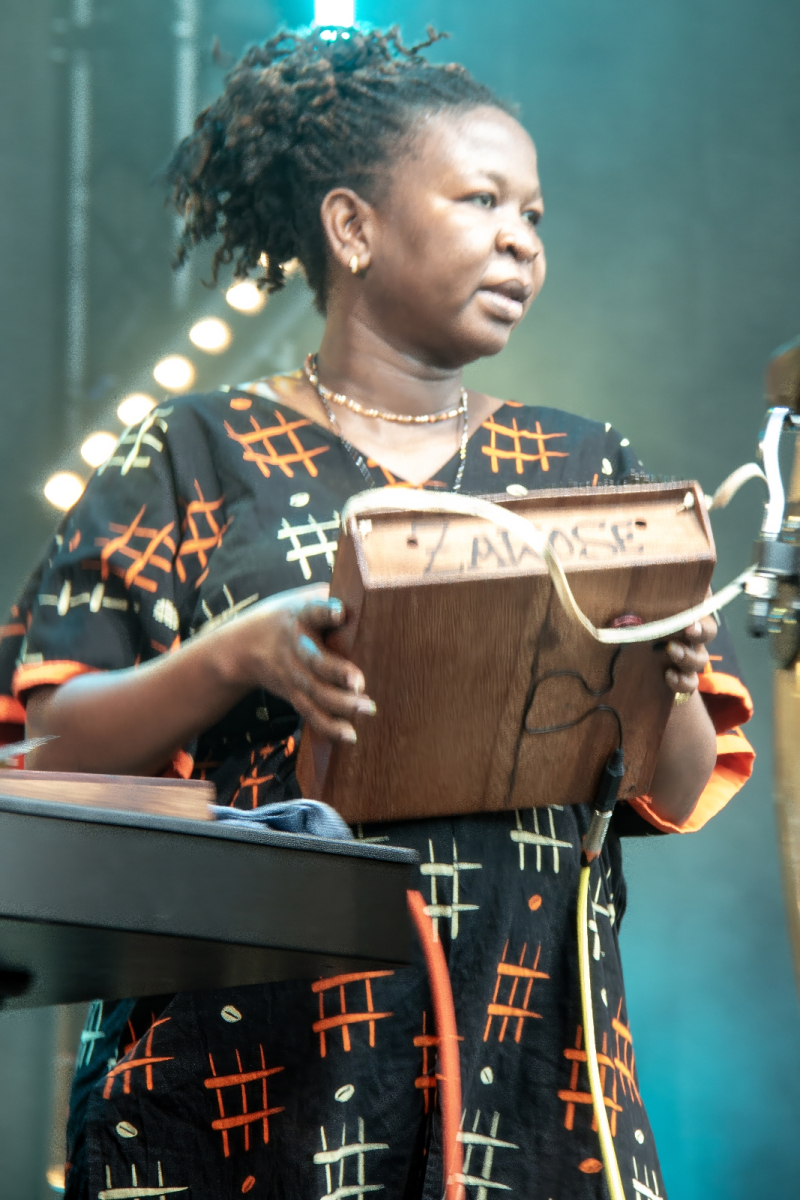
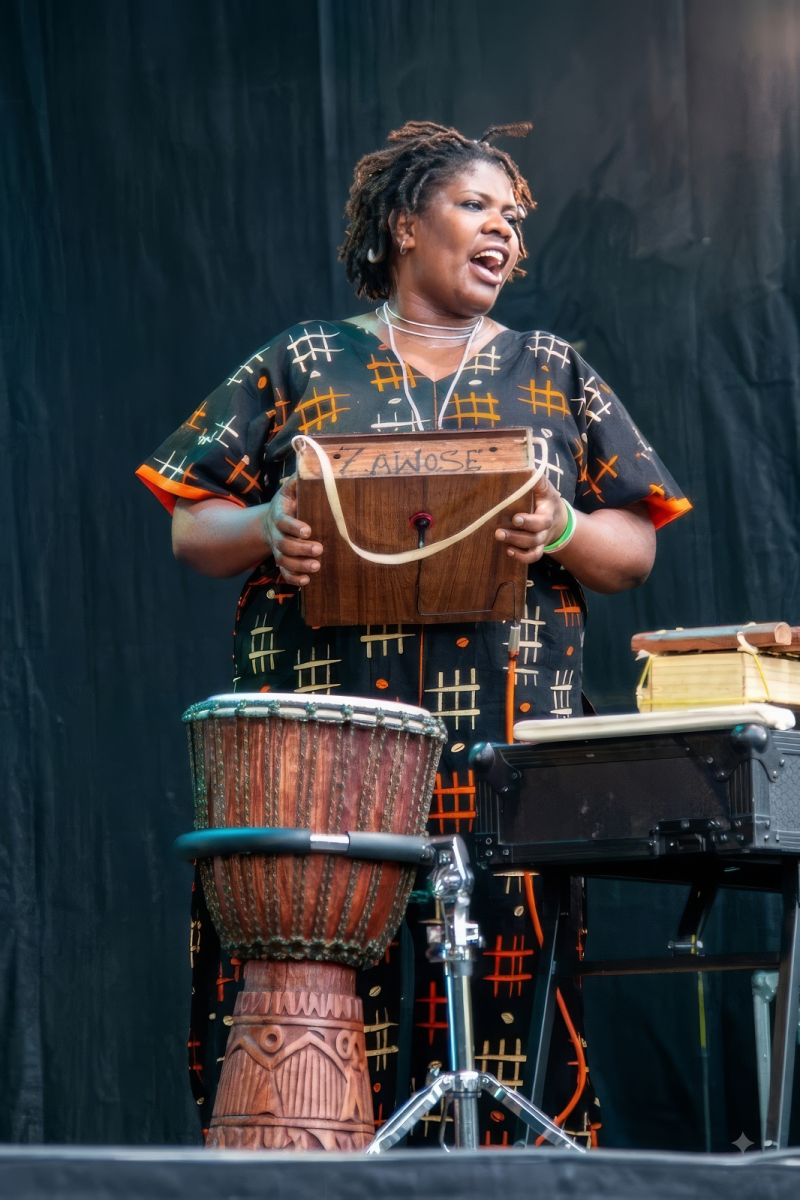
Down on the Song Festival Grounds, the sounds pulled from much further away. The Zawose Queens held the first Tanzanian booking in Viljandi’s history, and the sky opened just as they were due on, the kind of delay that empties a field. It did not. People pulled up hoods and waited, and by the time Pendo Zawose and her niece Leah came on, the wait had sharpened the air: Wagogo polyphony over ilimba thumb pianos and chizeze fiddle, a London rhythm section laying psychedelic rock beneath, a rain-soaked crowd that had chosen to be there. Their grandfather Hukwe Zawose carried this music around the world but never once let the women of his family sing lead; two generations on, his daughter and granddaughter stood at the front of the stage.
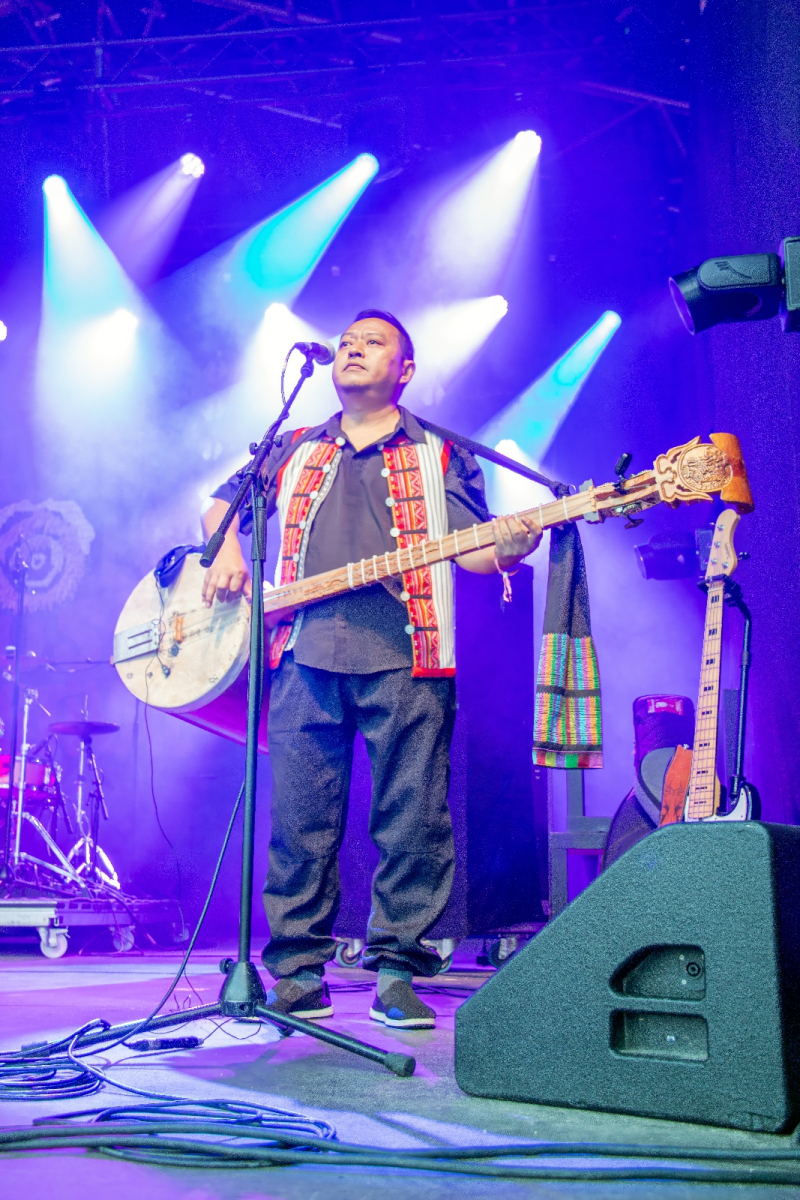
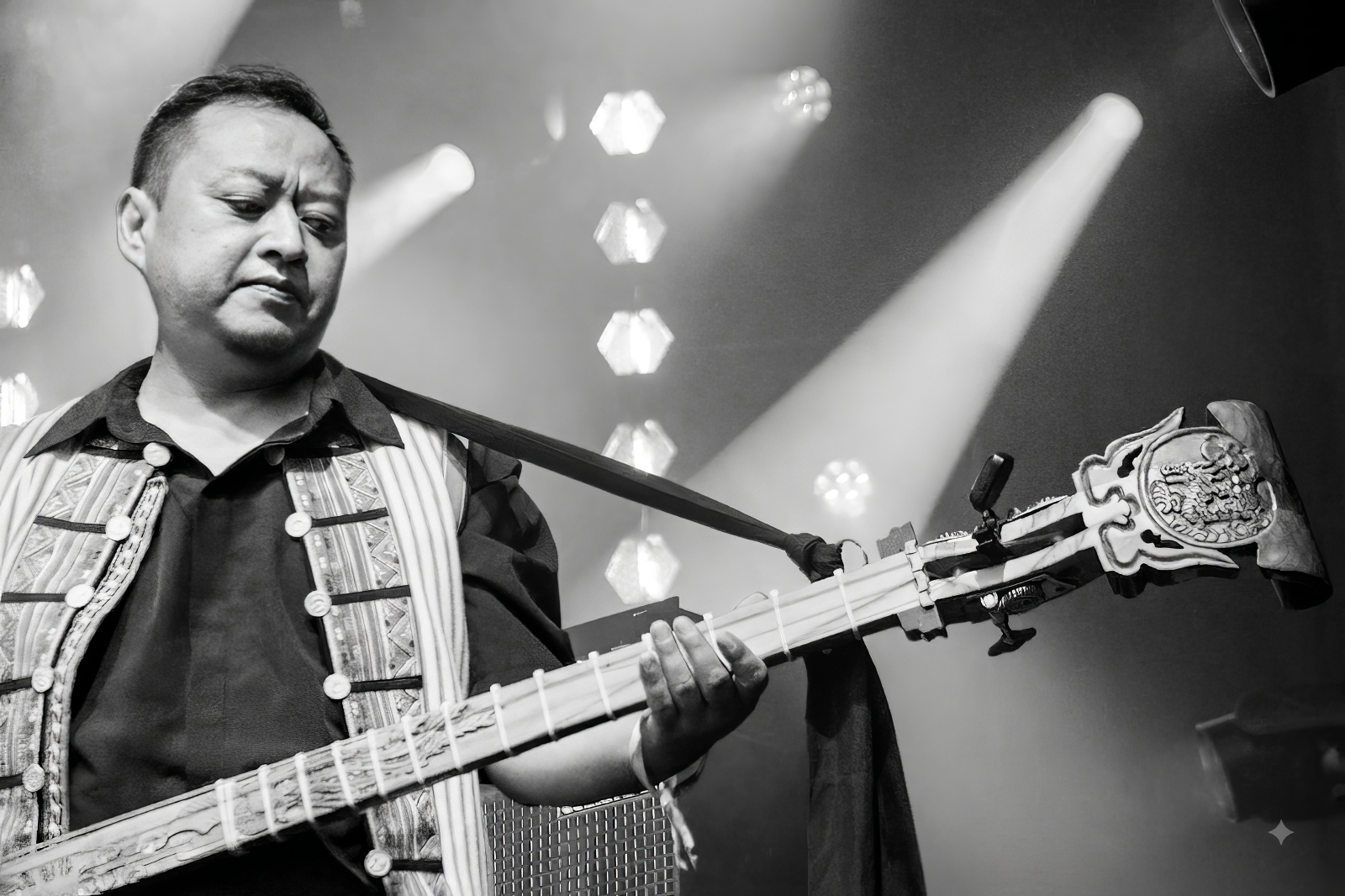
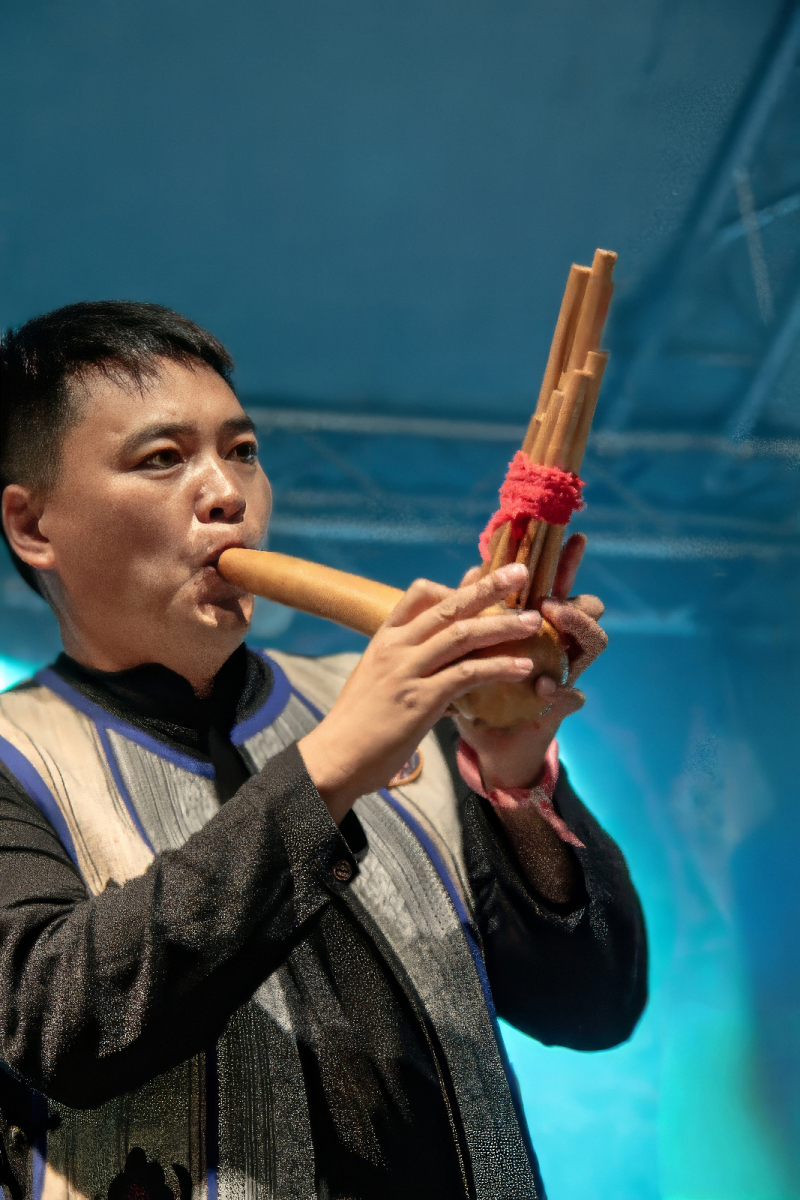
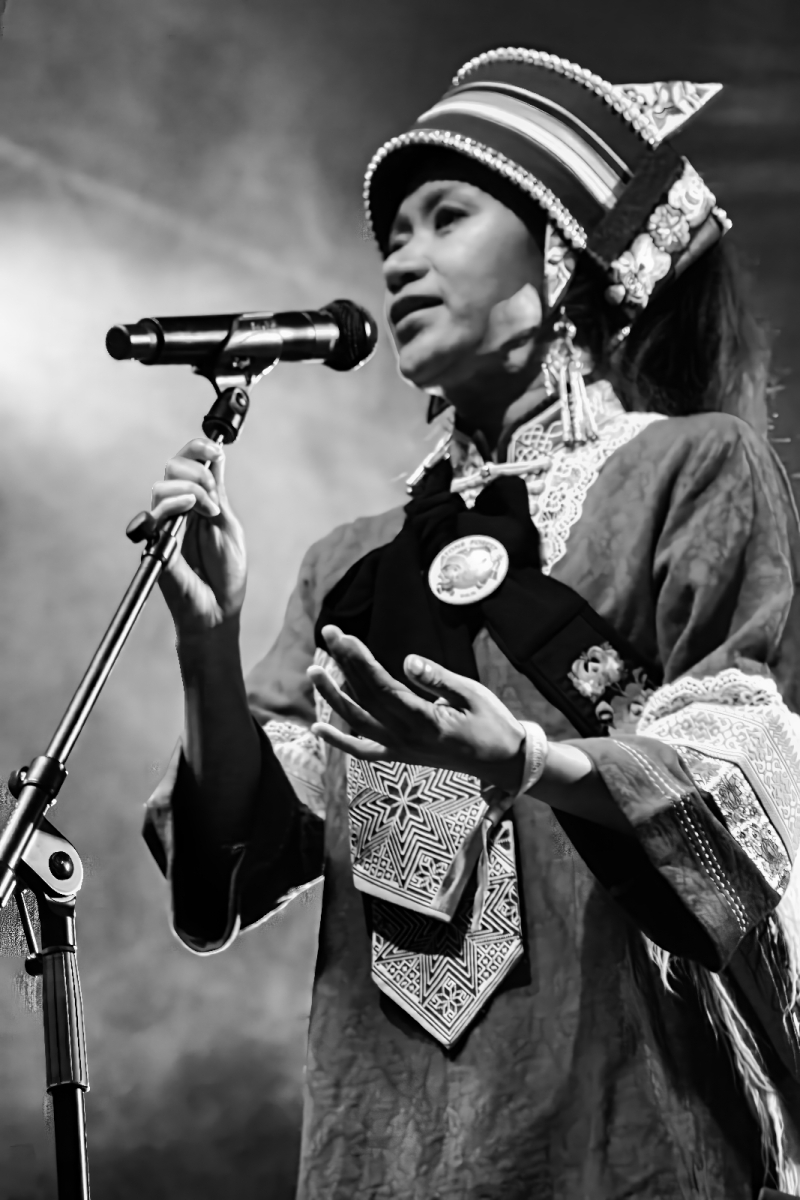
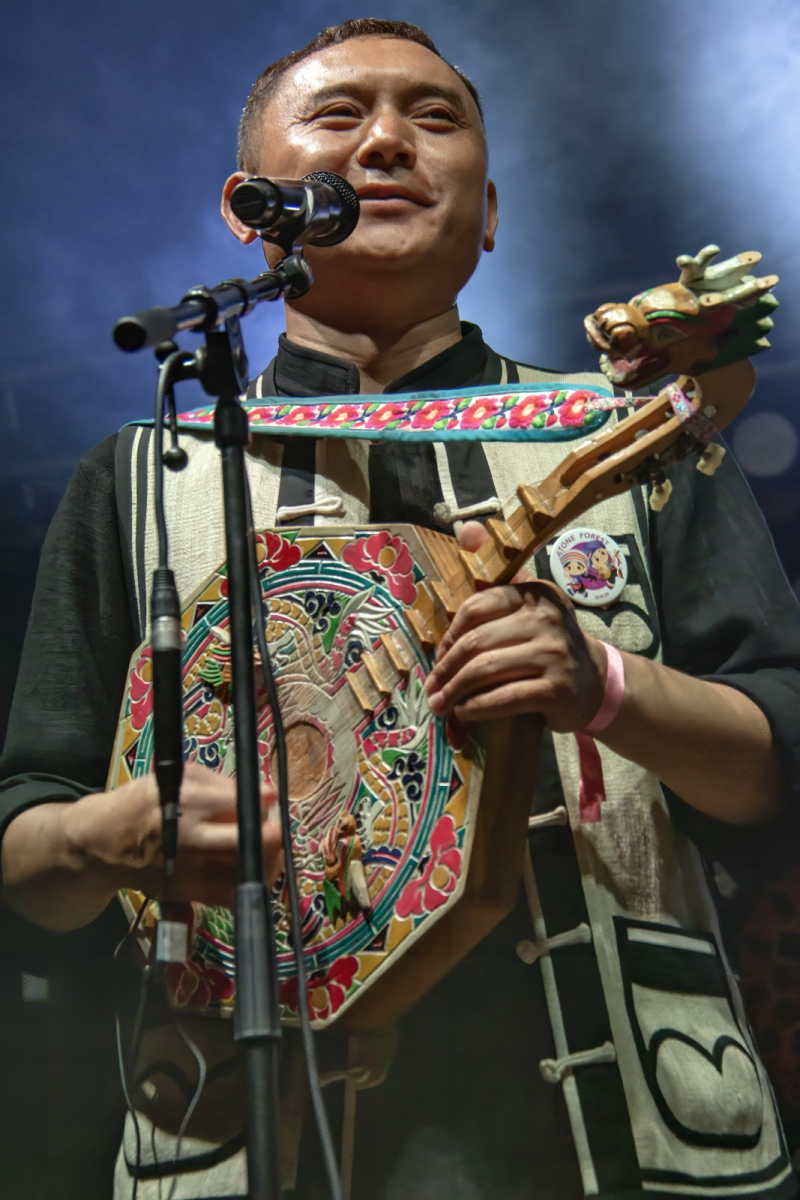
The rain never really let up on the first evening, and neither did the appetite for dancing in it. Manhu closed Kaevumägi from half nine, five Sani players from the farming villages of the Stone Forest of Yunnan, together since 2003. They build from the lusheng, a bamboo mouth-organ whose drone sets the whole thing running, then stack the three-string adiza and call-and-response singing on top, with bass and drum kit worked so far underneath that the village music always keeps the upper hand. This is the sound of Sani daily life, drinking songs, welcome songs, love songs, seasonal tunes, nearly all of it built to move to, and they run a set the same way: a tune, a stop to walk the crowd through the steps, then the tune again, faster. Not a full sentence of English passed between the five of them and none was needed. One lifted a single leaf to his lips and bent a melody out of it; the steps were called by demonstration, arms up, follow this. By the last stretch a cold, soaked Estonian crowd that had never heard Sani music in its life was strung across the grass doing Yunnan courtship dances in the rain.
Outdoors, the weather could be worn like a badge. Indoors, it exposed the festival’s one real weakness. Early shows had already packed the Ait to the walls. Over at the Sakala Centre, TõnisMägi, whose “Koit” became an anthem of the 1988 Singing Revolution, sold out fast enough to leave a queue stranded at a closed door, though these days the noise around him owes as much to his divisive public stances as to his songs. It happened repeatedly over the next three days: too many people, too few seats, and indoor rooms never built for crowds this size.
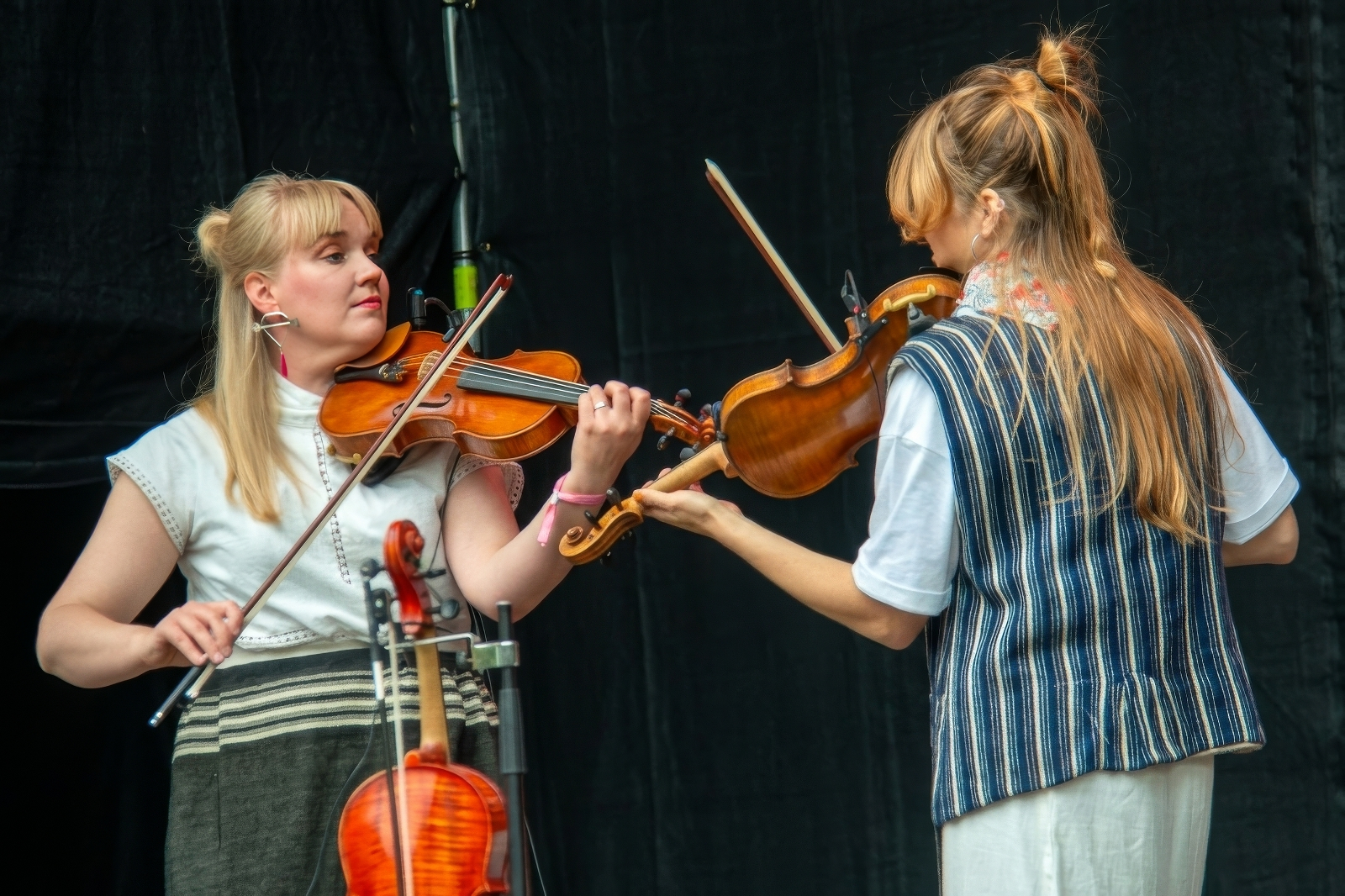
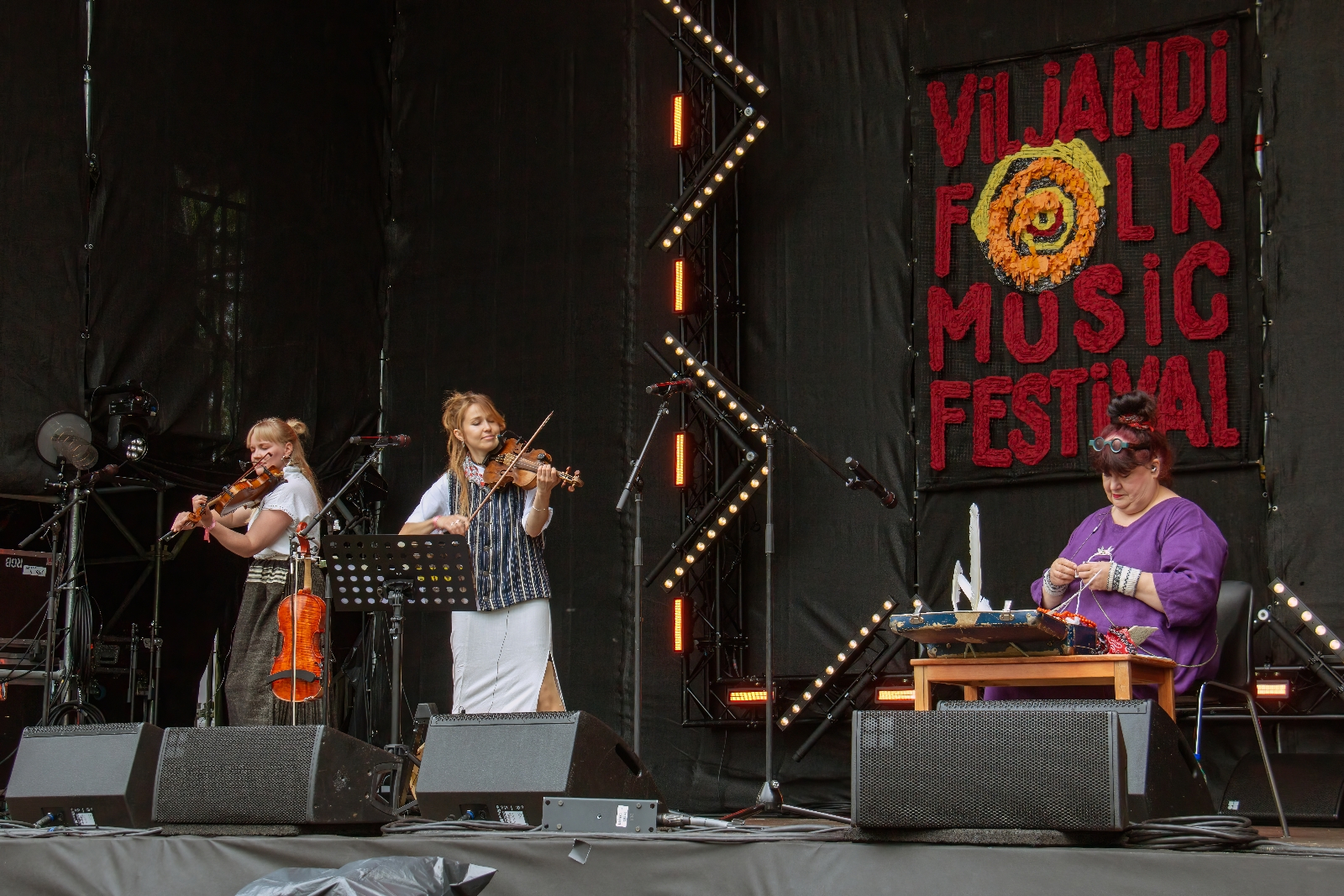
Friday opened, in the early afternoon, on Ruhnu, with music and tales that had come closer than most to disappearing for good. Sounds and Stories from Ruhnu Island takes its name from a speck in the Gulf of Riga, Runö in Swedish, that held a few hundred ethnic Swedes and their own fiddle tradition until 1944, when the Soviet advance emptied the island almost overnight and left the repertoire alive only on tape. Fiddlers Karoliina Kreintaal and Lee Taul, with storyteller Kairi Leivo, have spent years playing it back off those recordings, and here they did it as a one-off. Ruhnu-born storyteller Jüri Keskpaik told the island’s life from the inside, its weddings, feasts, church and sea, while three members of the Nordic supergroup Groupa sat in: fiddler Mats Edén, flautist Jonas Simonson, and Terje Isungset, the Norwegian percussionist who builds his instruments from wood, stone and ice, all three back on Kaevumägi a few hours later for Groupa‘s own set. Behind them the whole time ran the island itself, archive film of Ruhnu’s shoreline, its people, customs and dances, a vanished community moving on screen while its own tunes played live underneath.
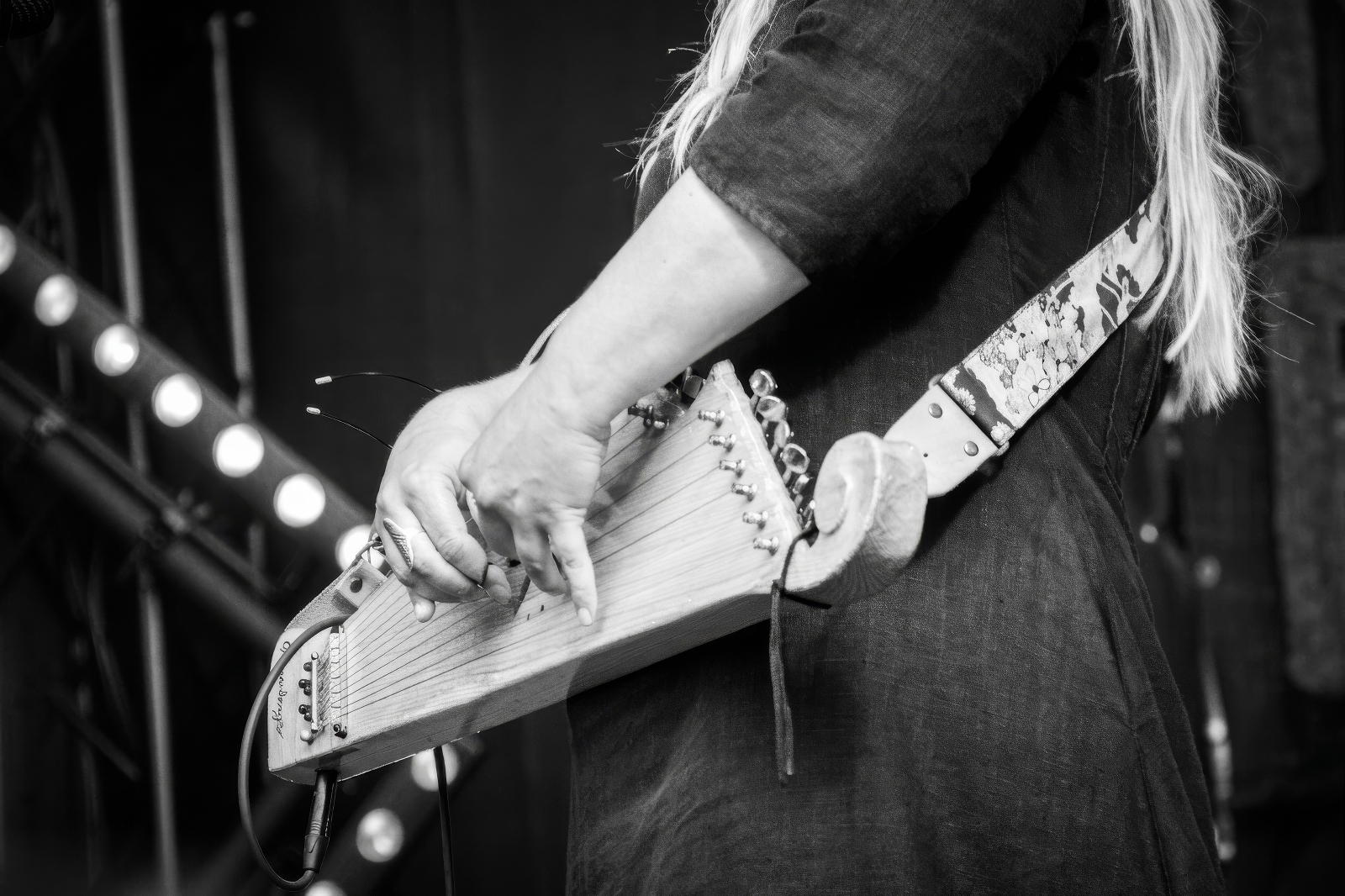
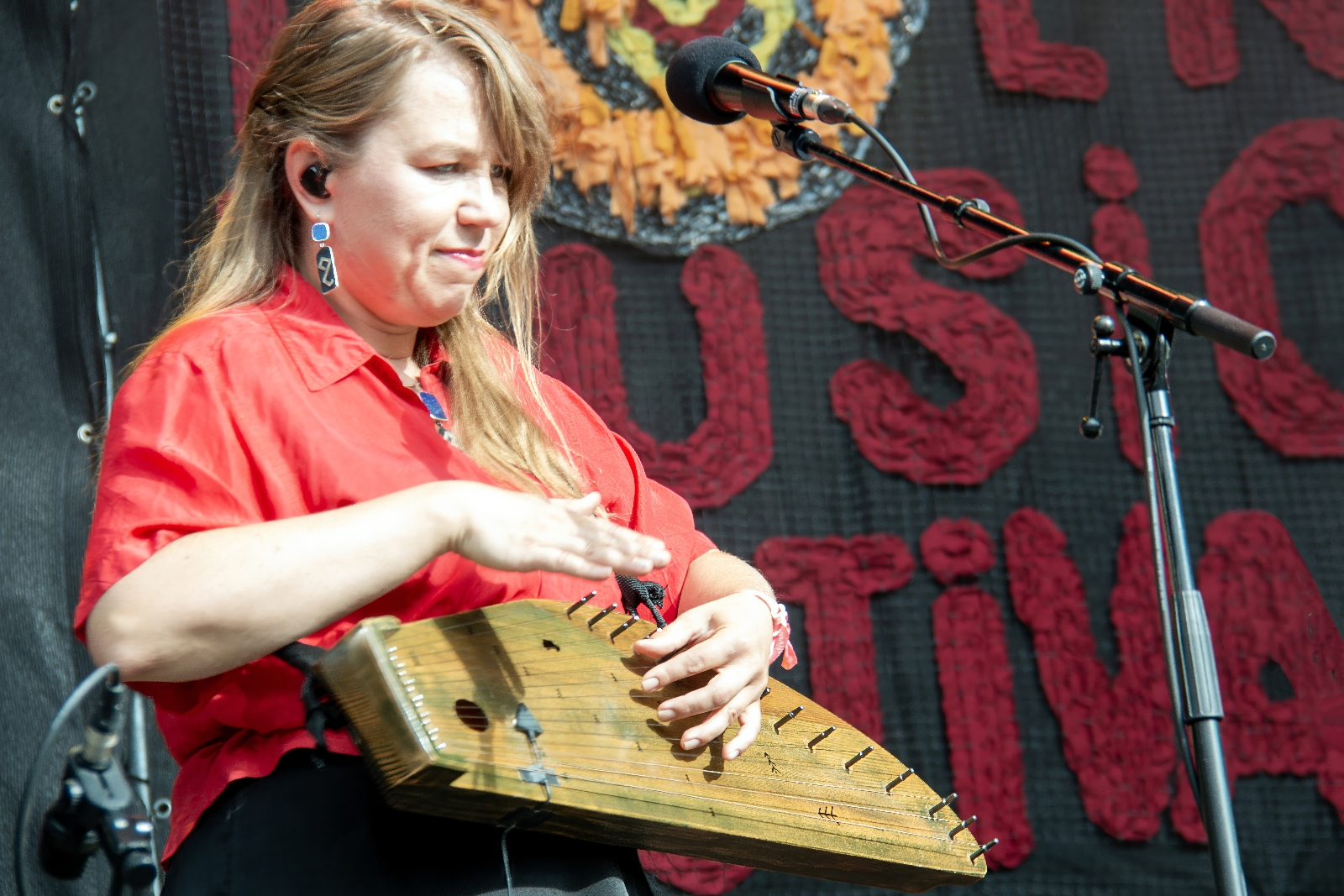
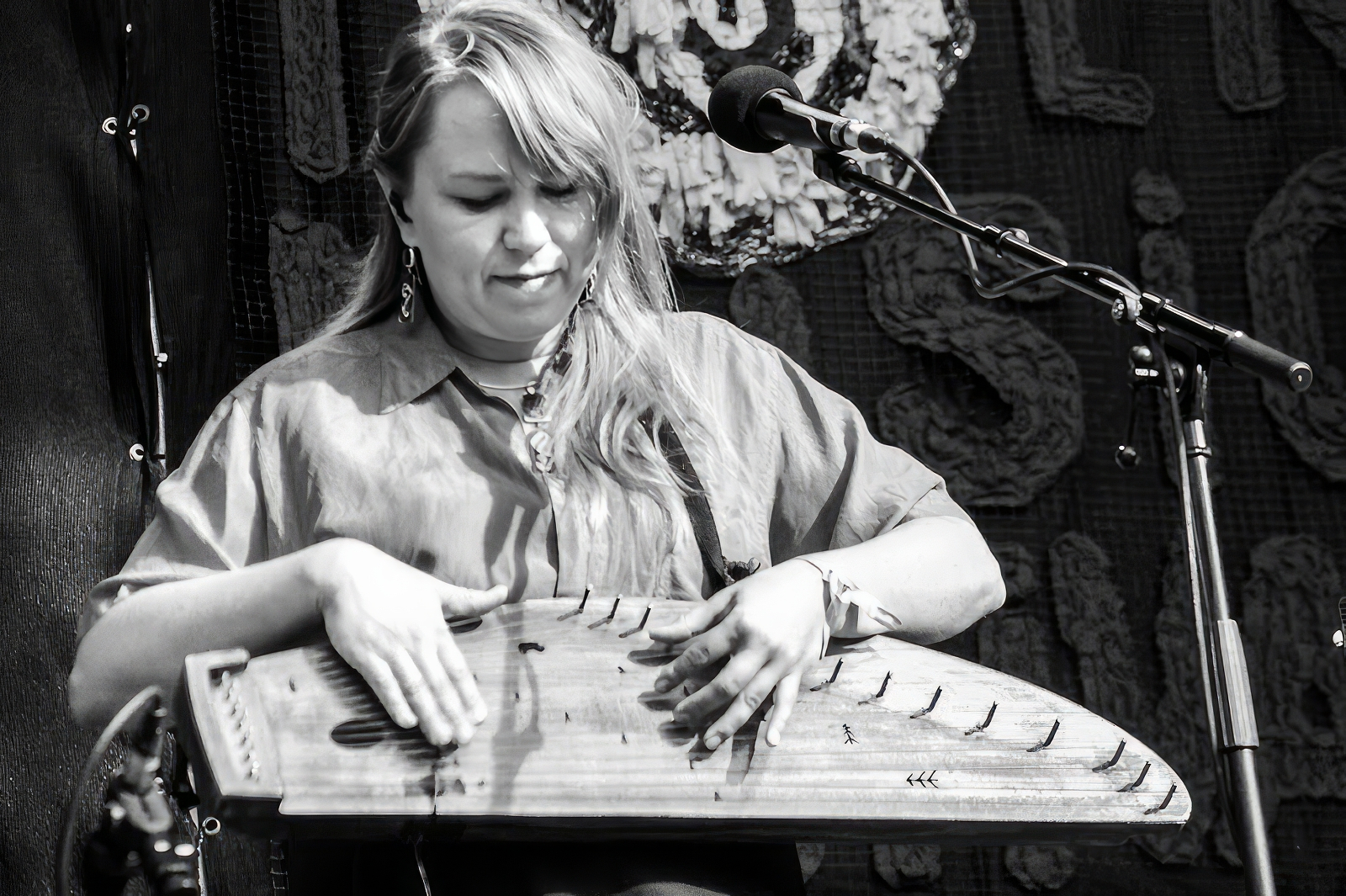
Later that afternoon Mari Kalkun, born and raised in the Võru country of Estonia’s south-east and one of the few keeping its endangered Võro language sung, brought her kannel up against the kokle of Latvian player Laima Jansone. The kannel and the kokle are cousins, box zithers grown from the same ancient Baltic instrument and drifted so far apart that their traditions barely recognise one another now. Set them back together and that separation is nowhere to be heard: Kalkun’s playing drifting and psychedelic, her voice carrying the Võro songs she has spent a career prising out of the archive, against Jansone’s harder, more rhythmic attack, the two instruments circling, answering, now and then locking into a single line as though they had never parted. Then Kalkun left the stage entirely, microphone in hand, and walked into the middle of the field to sing from there, the crowd falling quiet and closing around her as she moved.
In the evening, Amaro Duho kept their tradition in the family, literally. Matild Dobi assembled the band in 2021 from her own children, four decades after she helped start Ando Drom, one of the great names in Hungarian Roma music, and the point was to hold the songs together rather than let them scatter. It showed. Oláh Roma tradition on guitar, tambura and accordion, their own tunes threaded through the inherited ones, all of it played with the loose, unforced ease of people who do this around a table at home and happened, that night, to be doing it in front of a few thousand strangers.
Estonian tradition can be handled far less gently, and Mandoterror proved it: a distorted rhythm section and a mandolin screaming where a lead guitar should be, five players who take Estonian folk melody and hit it at Nordic-metal weight. Kristjan Kuusmik stood out front on vocals, Tanel Sakrits‘ mandolin carrying the tunes a fiddle would usually hold, the old material cranked through songs from last year’s Nõiajaht and the anthem ‘Oru Leeni’. There is no compromise in it. The melodies land as though they were originally written for the extra volume: fast, sharp, and carrying clean across the grounds.
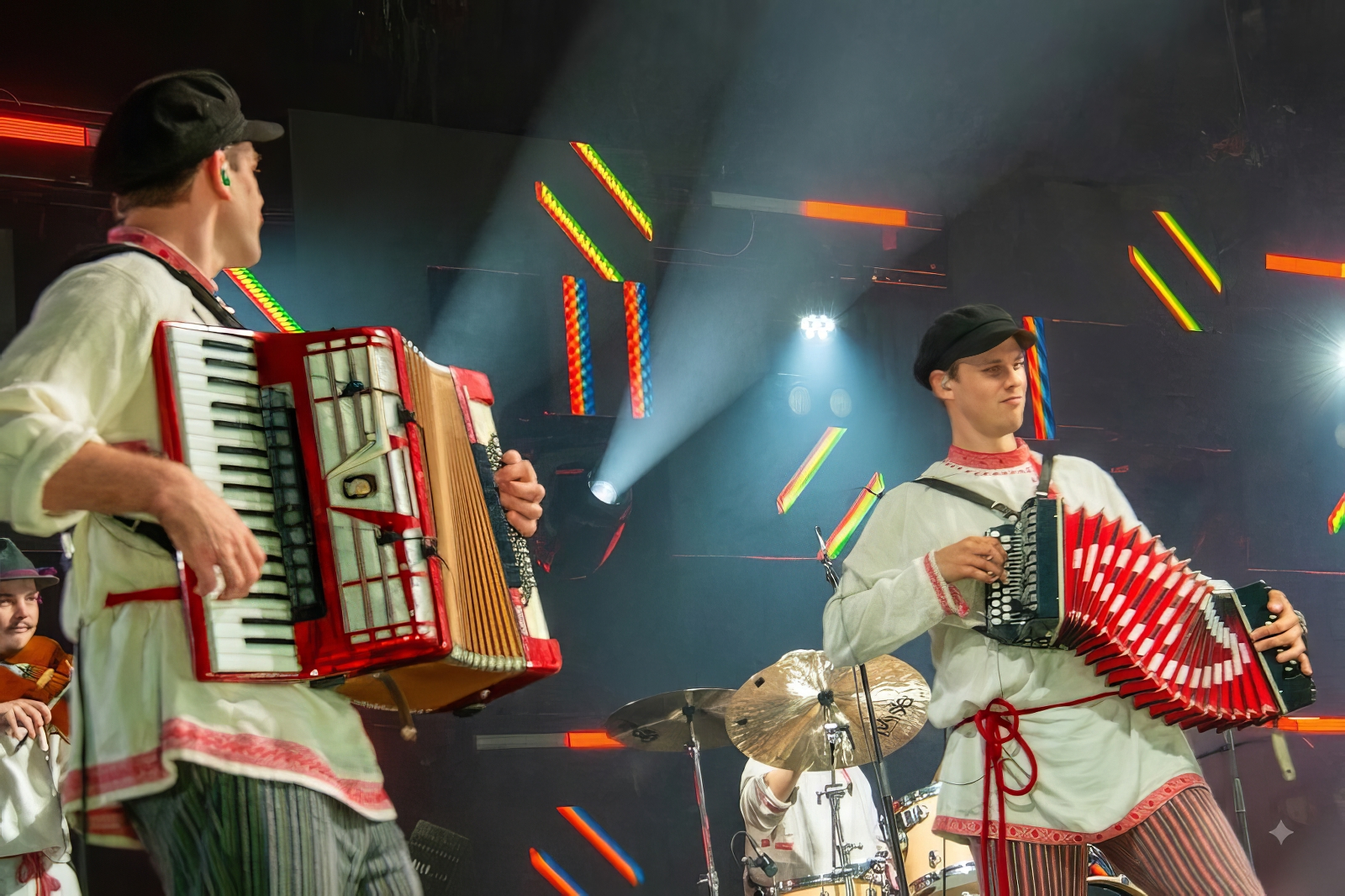
The bigger stages found their real heat once it got dark, starting with Zetod on the Song Festival Grounds, the set that, by the reckoning of more or less everyone there, was where the festival properly began. Formed in Värska in 2003, they take Seto leelo, the old polyphonic singing of Estonia’s south-eastern border country, and play it at the speed and volume of a punk band: short hard songs stacked back to back, every word in Seto dialect, the pit moving from the first number and a whole field firing the lines back. In keeping with the year’s theme they built the set around four fiddles, one apiece, over accordion, bass and drums, the old dance tunes and archive material driven hard and fast. The singing that once went slow and unaccompanied, one voice leading and the rest answering, comes out here distorted and double-time, and nobody down the front drops a syllable. Most of the pull is frontman Jalmar Vabarna, who has fronted the band since they were teenagers and, off the stage, happens to be the elected ülemsootska, earthly stand-in for the Seto king. Same job either way, really, carrying his own corner of the country in front of as many people as will have it.
By Saturday the site was full, 11,000 through the gates and the biggest crowd of the four days, the paths between stages packed from early afternoon as people wove from one set to the next. It all spilled onto the Song Festival Grounds, where HrayBery had the whole arena linking hands. The Polish-Ukrainian band rebuild village dance music from old scores and field recordings of the San river valley, a border region of eastern Galicia once shared by Poles, Ukrainians, Jews and Roma before post-war deportations scattered its people. They looked the part, in the Sunday best of a century ago: straw boater hats over dark suits and waistcoats for the men, high-collared white blouses and pale skirts for the women. Two fiddles, hammered dulcimer and frame drum drove the kolomyjkas, mazurkas, polkas and kozaks, and the crowd read the cue: great circling chains across the concrete, ring inside ring, while the grass banks behind filled with people watching them turn.
A couple of hours later, still on the Grounds, the picture shrank from a full folk band to two women over a single instrument. Duo Ruut are Ann-Lisett Rebane and Katariina Kivi, who sit facing each other across one kannel, close enough to touch, one plucking while the other bows or drums the body, their voices soaring into harmonies that can hold a field still. Here they broke that on purpose, billing the set as Duo Ruut³ and pulling in Indrek Mällo on bass, Jaan Jaago on electric guitar, and on percussion Tõnu Tubli, who drummed a decade in Trad.Attack! and had already remixed the duo’s tunes on his own record. Outdoors, the expanded setup carried and got people moving, but it cost something too: the fine, quiet tension of two players negotiating one instrument is what makes them extraordinary, and a rhythm section inevitably paints over it. Still, once a real beat was locked under the runo song, the Grounds went from hushed to dancing.
Over on II Kirsimägi, the boundary between the stage and the dirt dissolved entirely. Orkesta Mendoza opened with ‘Cumbia Volcadora’, six of them in matching suits, though nothing stayed buttoned down for long. Sergio Mendoza ran the set from the keys with an accordion slung across his chest, and on his shout of “¡Derecha! ¡Izquierda!” the whole field threw its hands right, then left, in time with him. Quetzal Guerrero sawed at the violin like an acrobat, Ozzy Acosta’s percussion kept the cumbia turning underneath, and Victor Hugo drove the band from the kit. Mendoza grew up in Ambos Nogales, the town the US-Mexico border splits in two, and the Orkesta plays what that town might sound like with the line gone: mambo, cumbia and ranchera rammed into surf guitar, psychedelia and indie rock.
The Grounds kept filling as night came on, until the weekend’s largest crowd, some 8,000—packed in for Puuluup. Ramo Teder and Marko Veisson play the talharpa, a bowed lyre all but extinct outside the island of Vormsi, except they drum, bow, pluck, and brush it, feeding horsehair through loopers until a knocking, creaking rhythm rises out of a single ancient instrument. For a few numbers they brought out company: Tubli was back behind a kit, slamming real drums into a stage the pair usually run on loops and horsehair alone. In tuxedos and flat deadpan, Veisson’s voice rumbling low beneath Teder’s higher line, they sang in Estonian and a language of their own invention, stopping dead between numbers to sell the crowd straight-faced nonsense about what they’d just played. It was Veisson’s 50th, and when the field found out, thousands sang him happy birthday. He answered the only way that suited the night: throwing himself off the front to crowd-surf the field. They tried out new dance routines on the spot, saving their wildest choreography for a set that felt looser and warmer than usual. By the end, Duo Ruut were up there too: Rebane and Kivi crowding the microphones alongside Teder, Veisson, and Tubli, all five packed around the stand to see it out.
Puuluup had warmed the field. OOPUS came to pound it. Mari Meentalo fed bagpipe, jaw harp and regilaul into a looper and handed the loops to Johannes Ahun’s analogue Roland synths, thousand-year-old runic song coming back out of the machines as acid house, while Aleksander Sprohgis’ lights, pinned to the beat, cracked across II Kirsimägi every time the bassline turned over and Raho Aadla danced it out at the front of the stage. OOPUS bill themselves as folk on acid and mean it to the letter: the bagpipe drone sat under a squelching acid line as though it had been waiting a millennium for exactly that, with their latest Reivlender playing as one long build. By mid-set a crowd that had spent the day watching thumb pianos and kannels was going properly, sweatily off, the oldest material on the whole bill turned into the closest thing Viljandi had to a nightclub.
After midnight the festival split its mood in two. Kaevumägi turned inward for Kuula Hetke, the flute duo of Kärt Pihlap and Katariina Tirmaste, whose name translates as “listen to the moment” and whose method lives up to it: they take melodies from the home regions of their great-grandparents, Mulgimaa and Võrumaa, thread their own writing through them, and pull the whole thing apart and back together on stage. Two flutes, voice and electronics built into slow, elemental soundscapes, and beside them the visual artist Okeiko painted a video world in real time, improvising brushstrokes to match every shift in the music. The Song Festival Grounds went the other way, loud and communal, as Tuulebant+ marked ten years with a birthday set. What began as a handful of young Estonian lads deciding to play together has become a fixture of the dance floors, acoustic guitar, fiddle, bass and lõõts (the Estonian button accordion) under four voices, driving the kind of brisk, folk-rooted dance music that owes a clear debt to Untsakad and the Kukerpillid before them. For the anniversary they swelled the core band out with guests borrowed from other line-ups across the weekend, the plus in the name doing real work, and sent the last of the night’s crowd home dancing.
Sunday came in warm and dry and ended wringing wet. The early afternoon on I Kirsimägi got a soft landing from Tell Your Birds, an Estonian, Latvian and Italian quartet who assemble their music from old tapes and Baltic tunes, running Estonian and Latvian folk melodies and field-recorded voices through electronics into long, drifting drones. Fiddle, bowed lyre and balafon carried the tunes up front while the fourth of them worked synths and effects beneath, turning a grey start into something to wake up slowly to.
By late afternoon, the sun had pulled the crowd onto Kaevumägi for Nancy Vieira, who brought Cape Verde to Viljandi, and morna to the festival for the first time in its history. Widely seen as the heir to Cesária Évora, Vieira carries that same slow, aching island sound. Born in Guinea-Bissau to Cape Verdean parents before moving to Lisbon at 14, she embodies the exact displacement morna is written about: the voice of the person who left. Backed only by guitar, cavaquinho, light percussion, and her own cool, unhurried lead, her set folded fado, Brazilian rhythms, and West African lines into songs from her 2024 album Gente. Then came the shift: for the final numbers, she invited the crowd right up onto the stage, turning the show into a full-tilt dance through the fast, bouncing tunes of Ano Nobo.
The set the weekend had quietly been saving arrived that evening, and it went to Amy Laurenson. She had barely made the festival at all, held up by flight delays, cancellations, and baggage mishandling alongside guitarist Miguel Girão, reaching Viljandi just minutes before their Saturday slot on Kaevumägi in the rain and wind. Sunday finally did her justice, placing her at a grand piano inside the Ait. There, the Shetland pianist takes fiddle tunes written for a bow and hands them to the keys as a lead voice rather than accompaniment: reels arriving with their drive intact and their phrasing completely rethought. Out of the weather, the room went dead silent and stayed that way. It was the finest hour of the four days.
Fittingly, the last word went to a band from the festival’s own backyard. Angus formed in 2010 out of Viljandi and its Culture Academy, and have spent the sixteen years since turning out a warm, unhurried reggae, ska and dub sung in Estonian, their 2023 record Vibratsioon hailed by Raadio 2 as the flagship of Estonian reggae-rock. Seven of them shut the festival down from the Song Festival Grounds, joined by guest vocalist Sofia-Liis Liiv, playing out into a downpour to a soaked crowd that skanked through the mud and bouncing along to thick dub basslines and hip-hop rhymes. Before the final fade, frontman Anton Ventsel signed the weekend off with a line worth keeping: “Have a good evening, a safe journey home, and folk is forever.” A local band, on the last stage, in the wet, closing a festival their own town has built its name on.
Viljandi did not have its biggest year, but it had a better one than that. The man at the hotel desk had the right instinct and the wrong month. The next edition runs 22nd to 25th July 2027, worth writing down now, because he was not wrong about the room either.
The Viljandi Folk Music Festival returns in 2027, running 22nd to 25th July
Ticket sales open in December, but keep an eye out HERE