

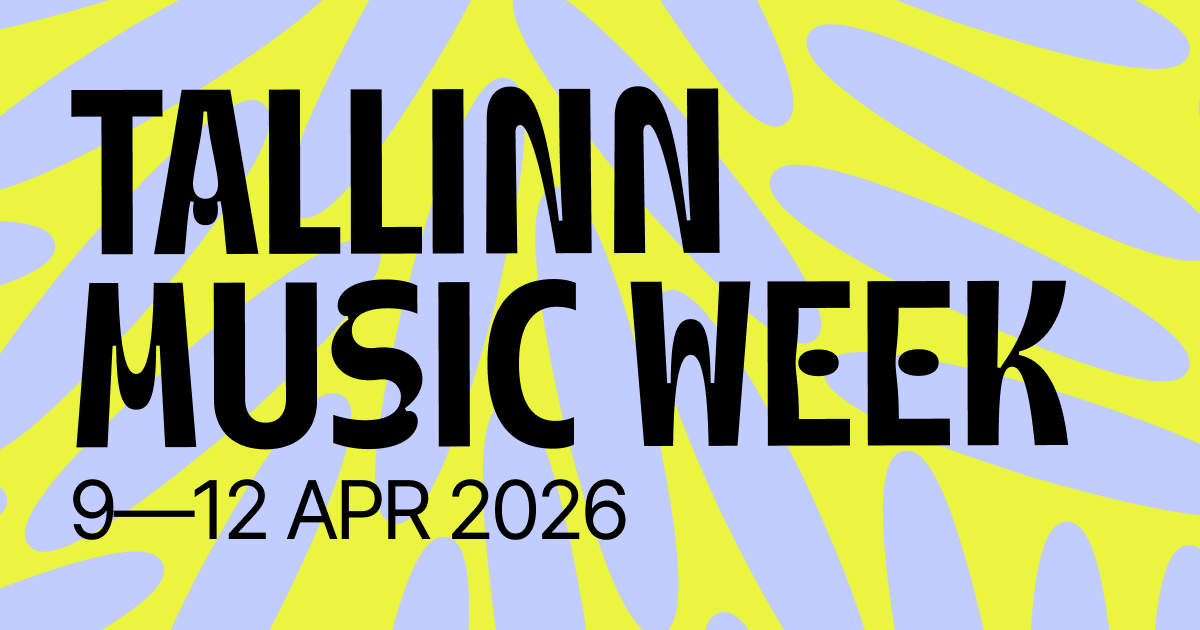
Every April, Tallinn becomes a place where the question “what is music for?” gets asked in a hotel conference room at 10am and answered on a warehouse stage at 2am. Tallinn Music Week does not separate those two moments. The festival has been running since 2009 on the understanding that the industry panels and the live stages need each other, that you cannot talk about creative survival in the abstract when a Kinshasa band is three streets away playing instruments built from recycled metal and plastic, or debate AI flooding the market while a Korean musician is bending traditional wind instruments into electro-acoustic shapes no algorithm could predict.
The 2026 edition, Thursday 9th to Sunday 12th April, brings 204 artists from 39 countries alongside a two-day conference programme at Nordic Hotel Forum. The music side alone covers metal, folk, jazz, classical, electronics, hip-hop, funk and several categories the organisers have stopped trying to name. Finland leads the international count with 26 acts, followed by Canada, France, Latvia and Sweden, while 80 Estonian artists anchor the home programme. The conference runs Friday and Saturday, with sessions on festival economics, AI in practice, music education, cognitive function under pressure, and a new DIY Panel format where the industry submits topics via open call and the strongest proposal becomes a full curated session.
The showcases start Thursday evening across a dozen stages. At Telliskivi Green Hall, Fenno-Ugria Night gathers Estonians, Setos, Finns, Sámi, Udmurts and Hungarians for a programme that moves between traditional song, modern folk and experimental electronics. Finnish-Norwegian trio Áššu bring Sámi joik into dialogue with jazz and global music, while Hungarian family group Amaro Duho, founded by Matild Dobi, co-founder of Ando Drom, close with traditional Hungarian Oláh Roma music. Finnish-Canadian collective Sulakuu write in Finnish, Estonian, Karelian and a self-developed inter-Finnic language they call Segasukukiel. At the Club of Different Rooms, the Roots Session stage brings Burkinabé-French group Kanazoé Orkestra, led by balafon player Kanazoé, working from Bobo-Dioulasso street and maquis traditions. Across town at Fotografiska, Breaking Bach – Marigó Trio! filters Bach through flamenco rhythm and jazz phrasing.
Thursday also brings the Welcome to Finland showcase to F-hoone Black Hall, where Finnish-Sámi duo Hildá Länsman & Tuomas Norvio pair Sámi luohti with electronic composition. Fotografiska also hosts Daughters of Donbas, a Ukrainian-Canadian human rights project led by singer Marichka. Built from testimonies of Ukrainian children abducted from occupied Donbas, the songs give voice to children rescued from Russian filtration camps. Marichka is a former Balaklava Blues and Lemon Bucket Orkestra vocalist, an Amnesty International Prize winner, and has worked between Canada and Ukraine as both musician and war correspondent.
Friday splits between conference and stages. The industry programme includes a public interview with Resident Advisor co-founder Paul Clement, sessions on AI entering its operational era, and wider discussions around festival instability, music ecosystems, and artist freedom. The night’s music centres on two curated strands. At HALL, Folktronica, curated by OOPUS members Mari Meentalo and Johannes Ahun and now in its seventh year, splits between heritage reworked for the club and broader electronic crossover. Belgian bagpiper Marieke Van Ransbeeck uses musette, säckpipa and live electronics in the solo work Underlands. Swedish collaboration Dyur x Fredy Clue pairs producer Johan “Dyur” with nyckelharpa player Fredy, pushing Swedish acoustic folk through heavy low-end electronics. Estonian flute duo Kuula Hetke, Kärt Pihlap and Katariina Tirmaste, draw on melodies linked to their families’ home regions, and their debut album won Debut Album of the Year at the 2025 Etnokulp Awards. Hungarian producer Obadu works from Hungarian and Romanian folk material with kaval and shepherd’s flute set against hip-hop and Latin American rhythms. French duo STORM push electric hurdy-gurdy and percussion towards crossover techno.
The Viljandi Folk Music Festival Stage at Von Krahl runs a parallel programme. Norwegian duo Almir & Daniel, Bosnian- and Serbian-born accordion and violin players, bring Balkan repertoire into dialogue with Scandinavian colour and won the 2025 UPBEAT Best New Talent Award. Estonian duo Duo Ruut, Ann-Lisett Rebane and Katariina Kivi, build their music around one shared kannel, using plucking, strumming, body percussion and two voices. They have toured in more than 20 countries, with appearances at Glastonbury, WOMEX and Celtic Connections. Polish-Belarusian acoustic band Hajda Banda, founded by violinist Daria Butskaya, draw on traditions from Podlasie, western Belarus and the Polesye wetlands. Danish, Estonian and Belgian trio Alterne, singer Ida Marie Jessen, violinist Oscar Beerten and accordionist Maimu Jõgeda, use violin, Hardanger fiddle, kantele, accordion and voice. Late on Friday, the Reivile Minuga series at Paavli Culture Factory opens with Colombian queer DJ and producer DJ Puppy Sierna, working from guaracha in sets that move between straight DJ work and hybrid live performance with vocal material and a strong identity-led club presence.
Saturday expands the programme further. The Africa NOW!stage at Paavli Culture Factory centres contemporary music from Africa and the Afro-diaspora. Tunisian duo JATHB work from Sufi ceremony and North African rhythm, filtered through analogue machines and modular synthesis, with their album WILLIA framed as ritual work. Kinshasa group Kin’Gongolo Kiniata, their name means “the sound that crushes”, play instruments built from recycled metal and plastic, tying Afropop, punk drive and experimental electronics to a strong urban DIY identity. Congolese-Canadian artist KIZABA stages an Afro-futurist live show built from vocals, percussion, drums, electronics and large-scale visuals inspired by Congolese masks. The Jazz Stage Saturday at Fotografiska runs alongside the Funk Embassy showcase at Von Krahl. South Korean composer and performer Dasom Baek works chiefly with daegeum and sogeum, treating traditional Korean wind instruments as material for electro-acoustic and experimental composition. Her recent catalogue includes the solo albums Nothingness and Mirror City, and she has played SXSW, Rewire and K-Music Festival. The Funk Embassy stage celebrates a decade of programming with Italian group Savana Funk, a Bologna trio working across funk, rock, blues and African reference points, with recent festival dates alongside Red Hot Chili Peppers, Seun Kuti and Kokoroko.
The conference programme on Saturday includes public interviews with Magne Furuholmen of a-ha and Cooking Vinyl co-founder Martin Goldschmidt, alongside “Everything Is Political” with Matt Black of Coldcut and Ninja Tune and Vlad Yaremchuk of Music Saves Ukraine, plus sessions on cognitive function and decision-making, AI flooding the market, accessibility in practice, and music education’s relationship to the wider ecosystem. The festival closes into the early hours of Sunday 12th April with the KIKUMU x TMW Official Afterpartyat Von Krahl, where Booka Shade meet Ajukaja & MartAvi.
From Telliskivi’s warehouse spaces to Fotografiska’s gallery floors, from Von Krahl’s basement bar to HALL’s club room and Paavli Culture Factory’s industrial shell, Tallinn Music Week spends four days asking what happens when the people debating the future of music have to share a city with the people actually making it. The answer unfolds across two dozen stages, hotel conference rooms, and however many late-night conversations happen in between.
Tallinn Music Week runs 9th to 12th April 2026 across Telliskivi and beyond
Conference passes, festival passes and individual tickets via the TMW website