

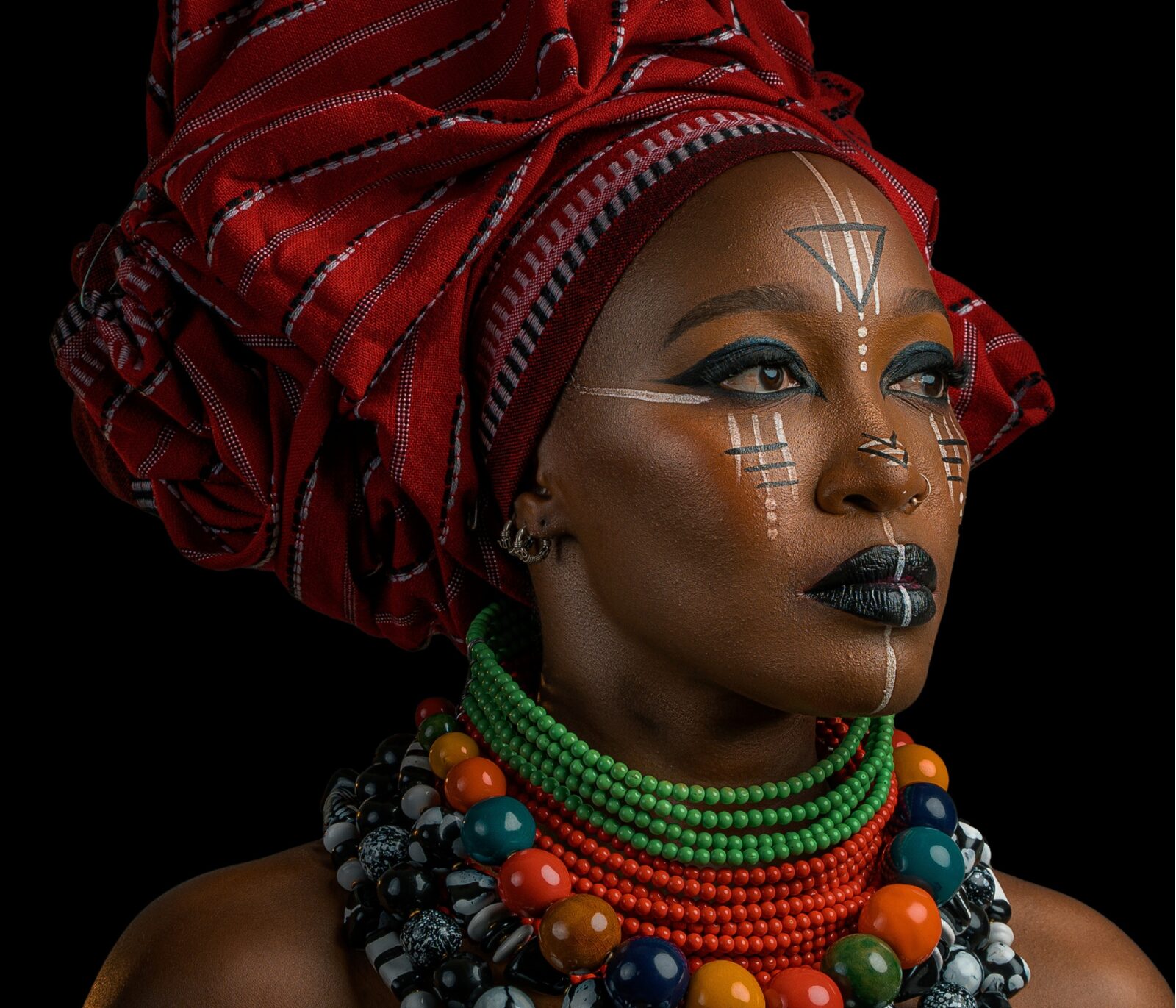
Her grandmother had run out of stories for the night. Go to the cow pen, she told six-year-old Kasiva Mutua , and listen to the secret the black bull is telling the white one. Kasiva went, listened, and returned having heard nothing but a bull sniffing the air. Her grandmother sent her back, told her to listen properly, that the secret was being told right now.
The second time, she heard it. Crickets layered on top of each other. Cows breathing in something close to a shared tempo. Wind moving through the trees, laughter drifting from the kitchen. She started humming what she’d heard, then playing it out on her own bed frame, her lap, her chest and cheeks, and from there on anything within reach: pans, spoons, a school desk, a bucket. Percussion belonged to men in the community she grew up in. She took it up anyway, and kept at it until she was one of the only women in Kenya playing it at all, continentally or internationally, and eventually one of the best known.
By 25 years old, she was a OneBeat Fellow, and the following year she joined The Nile Project, an East African touring collective she’s stayed with since. Two years later, in 2015, she co-founded MOTRAMUSIC in Nairobi, Kenya’s first all-female percussion collective, taking young women through a year of mentorship in rhythm, composition and performance. She’s also worked with Giant Steps Music and recorded for Coke Studio Africa. TED named her a Global Fellow in 2017, and she has spoken about the drum as a way of telling her own story. In 2020 a OneBeat Accelerator grant let her build Vibe na Queen, an online platform connecting Kenyan women musicians through the pandemic. Her 2022 debut EP Ngewa came after all of that, carrying what the teaching and the touring had put into her playing, and Desturi, her debut album released in February last year, picked up where it left off.
Fifteen years, Kasiva says, is how long she has wanted to play WOMEX, hearing it talked about long before she ever stood near its stage, called the World Cup of performances by everyone who had been. On 23 October, in Las Palmas, it happens. She is bringing the album with her, and an open invitation: find her showcase, and come share it.
She answered our questions for this year’s Musical Road to WOMEX, on the drum as a way of telling stories, on growing up in a place where it wasn’t meant to be hers, and on what she wants to find on the islands, and put together a playlist exclusively for Rhythm Passport, the tracks hers to choose.
You’ve described the drum as a way of telling your people’s stories. For someone hearing you for the first time, how would you introduce the sound you make now, and where does the voice sit alongside the percussion?
Rhythm is a universal language. It’s also everywhere around us. It’s heard, felt, it brings movement (dance, nod, make faces of expression) and evokes emotions. There’s no one who is excluded from rhythm. Children, adults, animals, people of different abilities and backgrounds; we all understand and experience it. We carry rhythm within us throughout our lives, and when the rhythm stops, life ends.
For someone hearing me for the first time, I’m a gentle reminder of the joy of having rhythm and how important it is to notice it.
The way rhythm sounds and is expressed can vary depending on where we come from, our travels, experiences, and the people and environments we encounter. But in all those variations, is the same foundation; rhythm is something we all carry within us.
My sound, then, is something familiar, rooted in East Africa and shaped by nature, my experiences, stories, and the many influences of our African cultures.
You learned drumming from your grandmother in a community where the instrument was reserved for men. Looking back, what was the moment you understood that playing it would define your life rather than simply defy a rule?
I was inspired by my grandmother’s stories that she told me that taught me to listen to nature. And that way, I started hearing sounds and eventually rhythm.
I don’t think there’s an exact moment that stood out, rather a consistent chain of events that led me here. But I can remember a moment I asked myself “Surely, what else in the world can bring me this kind of joy? I LOVE this thing!”
WOMEX lands this year in Las Palmas de Gran Canaria, an Atlantic island with its own percussion: the tajaraste, driven by drum and chácaras, the big castanets thought to trace back to the islands’ North African roots. As a percussionist, what are you most curious to hear there?
Eeeeeeeverything, man! I wanna hear everything! From the music, to how the children there laugh, and how the water hits the rocks. I’m very curious about the island’s stories too!
In a WOMEX line-up full of the world’s traditions, what makes your showcase stand out, and what do you most want people to take from it?
My best friend says that there’s nothing as beautiful as watching someone fully immersed in something they absolutely love. There’s something about witnessing that kind of joy; it makes you fall in love with them, and somehow, in the process, you fall in love with yourself all over again.
Well… 😉
WOMEX is built on unexpected meetings. Are there particular artists, labels or collaborators you’re hoping to cross paths with in Las Palmas?
Yes, I’m looking forward to the beautiful connections that will be born out of WOMEX. I’m particularly excited to meet female artists and instrumentalists, some who I have already connected on Instagram, and women working across the music industry.
Your drumming is built to pull people in: call and response, bodies moving. A WOMEX audience is mostly music professionals, there to watch and assess rather than dance. How do you win a room like that?
Yes, they may be music professionals, but before anything else, they’re human. They are someone’s son, somebody’s daughter. They have kids, They have feelings, emotions, relationships, memories, pain and joy. They’re an audience like any other.
Rhythm doesn’t choose where to land or who it belongs to. Even I, myself, cannot control that. It simply does what it does. My role is to play and let it find its way to whoever is listening.
Your travels have a way of turning up in your music. Ahead of your first time in the Canaries, is there anything about the islands, their rhythms, their sounds, you’re hoping to come away with?
My travels have constantly shaped the person I am becoming. My interactions, experiences and stories all play a big part in the music to come. I’m very curious what this part of my musical journey will look like.
In much of Africa the drum has been a man’s instrument, off-limits to women, and you are one of the few who took it up, made a life of it, and spent years bringing other women in behind you. Is there a message you feel especially compelled to carry to an international audience through this showcase?
Ah yes. The beauty of our African cultures is that they are deeply complex and constantly evolving. I’ve lived through a time, before mobile phones and the internet, and now I’m living through this period of cultural transition, where we’re all negotiating what we carry forward and how it interacts with the world now.
For a long time, the focus was on me being a woman holding a drum. But I think the focus needs to shift from who is playing the instrument to what is being played.
I’ve dedicated my life to making sure the rhythms of my people continue to live and travel beyond home, to places where strangers can hear them, dance to them, and perhaps find something of themselves in them. It used to feel significant to be the only woman in the room holding a drum. Today, I’m less interested in that distinction. I’m more interested in the joy of sharing the music, traditions and stories that live within those rhythms, and allowing that to take centre stage.
Having moved from percussion into songwriting, production and your own voice, what’s next? New recordings, new collaborations, a direction you haven’t tried yet?
I’d prefer to see it as an “expansion of rhythm”. As I evolve, I am finding new ways of expression. I am very open to cultural evolution, and this brings in the aspect of collaboration. Traveling has deeply shaped who I’m becoming and interacting with different cultures adds to my musical DNA.
Yes, there’s lots of music to come. Yes, there’s collaborations and yes, there’s many directions I haven’t tried and perhaps are unknown to me just yet. I’m also excited to discover this! 😁
If you could write a personal invitation to the people arriving in Las Palmas to come and find your showcase, what would it say?
Let me tell you a little story…
For about 15 years, as I backed many artists in Kenya and around the world, I always heard this name “WOMEX”. And how it was said to me meant “This is the ‘World Cup’ of performances!” I always wanted to play here. With anyone really. I just wanted to get on this stage. More than 15 years later, it’s going to happen! And with my Desturi, my debut album.
WOMEX don’t really understand what they’ve done! They’ve allowed me to live a dream, and by doing so, have now given me permission to take on other dreams…
My name is Kasiva Mutua. Find my showcase and come, share my dream come true with me on 23rd Oct, massive Friday night! I’d love to have you there! The bigger the party, the bigger the celebration! Yay!
Ahsante! I love you! ❤️
Fifteen years of hearing WOMEX talked about end on a Friday night at Plaza del Espigón in Las Palmas.
Kasiva Mutua plays there on 23 October, and she's already told the city what she wants from it:
the bigger the party, the bigger the celebration!
PLAYLIST: KASIVA MUTUA X RHYTHM PASSPORT
You can find all the previous episodes of Musical Road to Womex HERE