

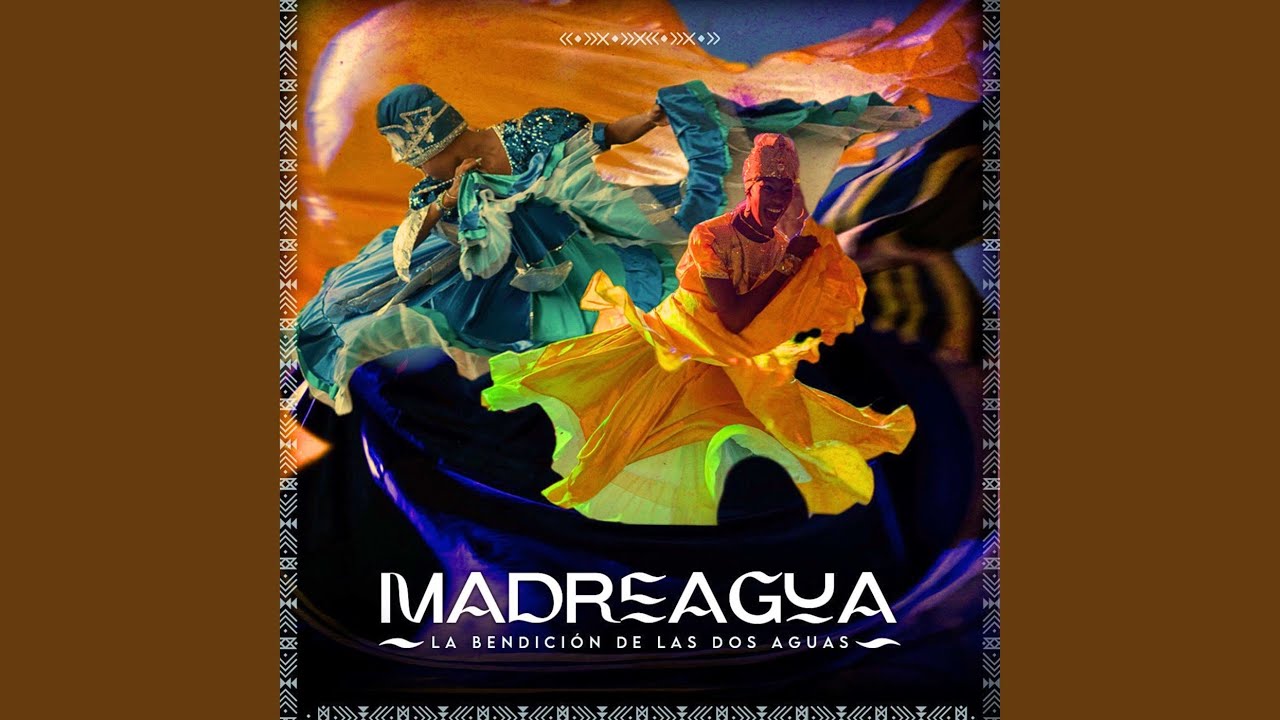
The elders tell of a sailor caught in a storm, mast snapped and sky shut, who begged the sea to carry him to dry land and offered his body, his song and his name in return. Yemayá, the Yoruba mother of the sea, brought him safely ashore. He dried the salt off his skin, forgot his fear and forgot his promise, until the day he tried to sail again and the waves turned their backs on him. Only when he knelt on the shore and sang did the sea take him back. Madreagua tell that story to explain La Bendición de las Dos Aguas: the album is their own promise, made to everyone who keeps the drum, that this heritage stays alive. The first song they sing to keep that promise is “Misa,” made with Acción Sonora, the duo of Miguel HM and Pablo Betancourt. Working out of Mexico, the pair put on immersive shows where surround sound drives visuals that react to the music, and on “Misa” they wrap Madreagua’s drums and chants in their electronics.
Madreagua grew out of the Festival de las Artes at the Instituto Superior de Arte (ISA), Cuba’s national arts university in Havana. They now count around thirty musicians, dancers and performers, led by artistic director Lizenia Zulueta and choreographer and filmmaker Roberto Silva. Their material comes from rumba and from the Yoruba, Congo and Arará traditions that reached Cuba with enslaved Africans, and they carry it from the university out into the island’s working-class neighbourhoods. The name is borrowed from Madre de Agua, a water spirit of Congo tradition.
The album came out on 8 September through GitanaMedia. It runs eleven tracks and an hour, with a Bantu suite, a thirteen-minute Yoruba suite for the orishas Eleggua, Oshun and Yemaya, and guests including Alexander Abreu, trumpeter and leader of Havana D’Primera. The group say the costumes, the drums and the rehearsals came almost entirely out of their own pockets. They dedicate the record to everyone who keeps playing and dancing when nobody pays them or watches.
Put “Misa” on HERE and find the full album through THIS LINK