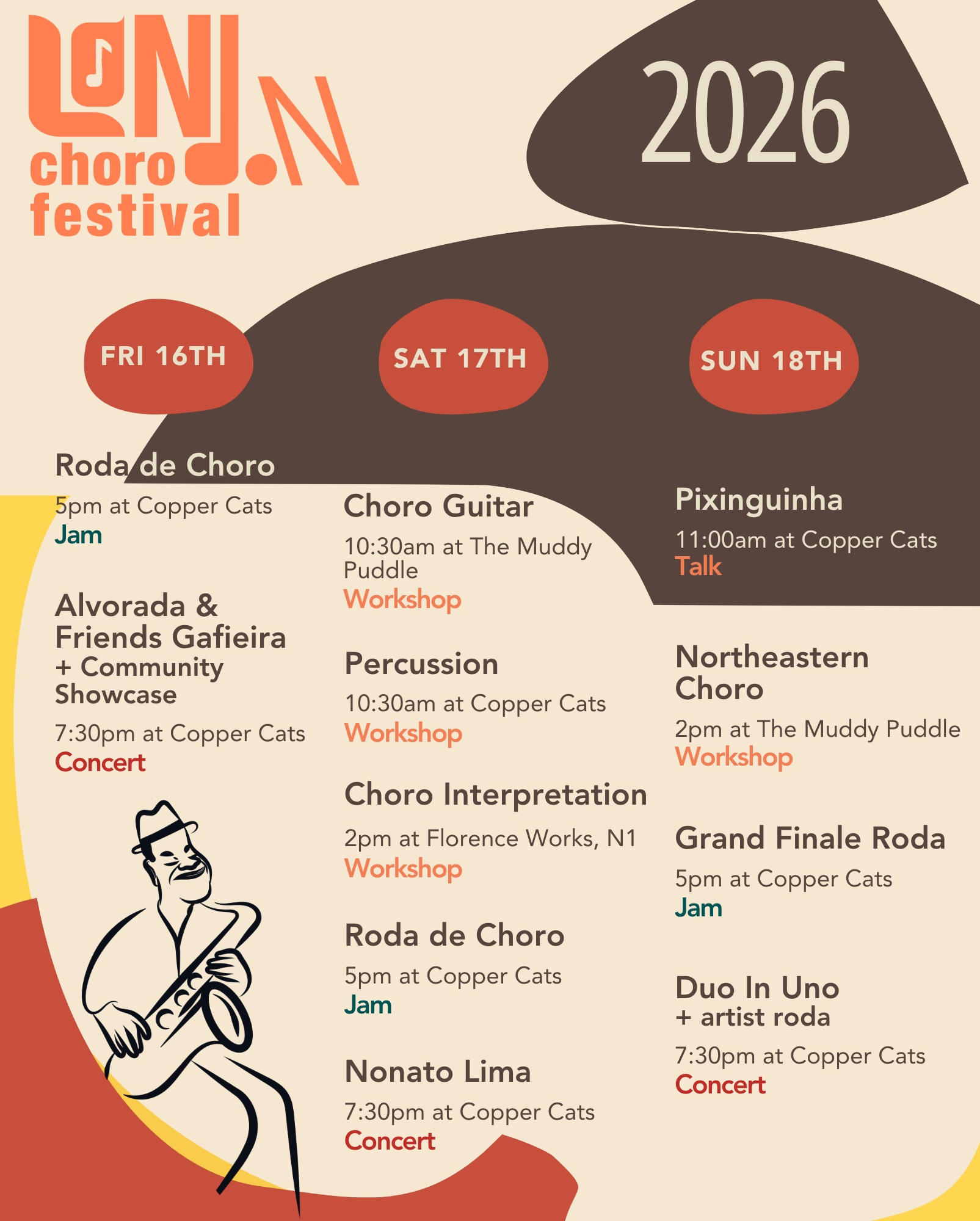

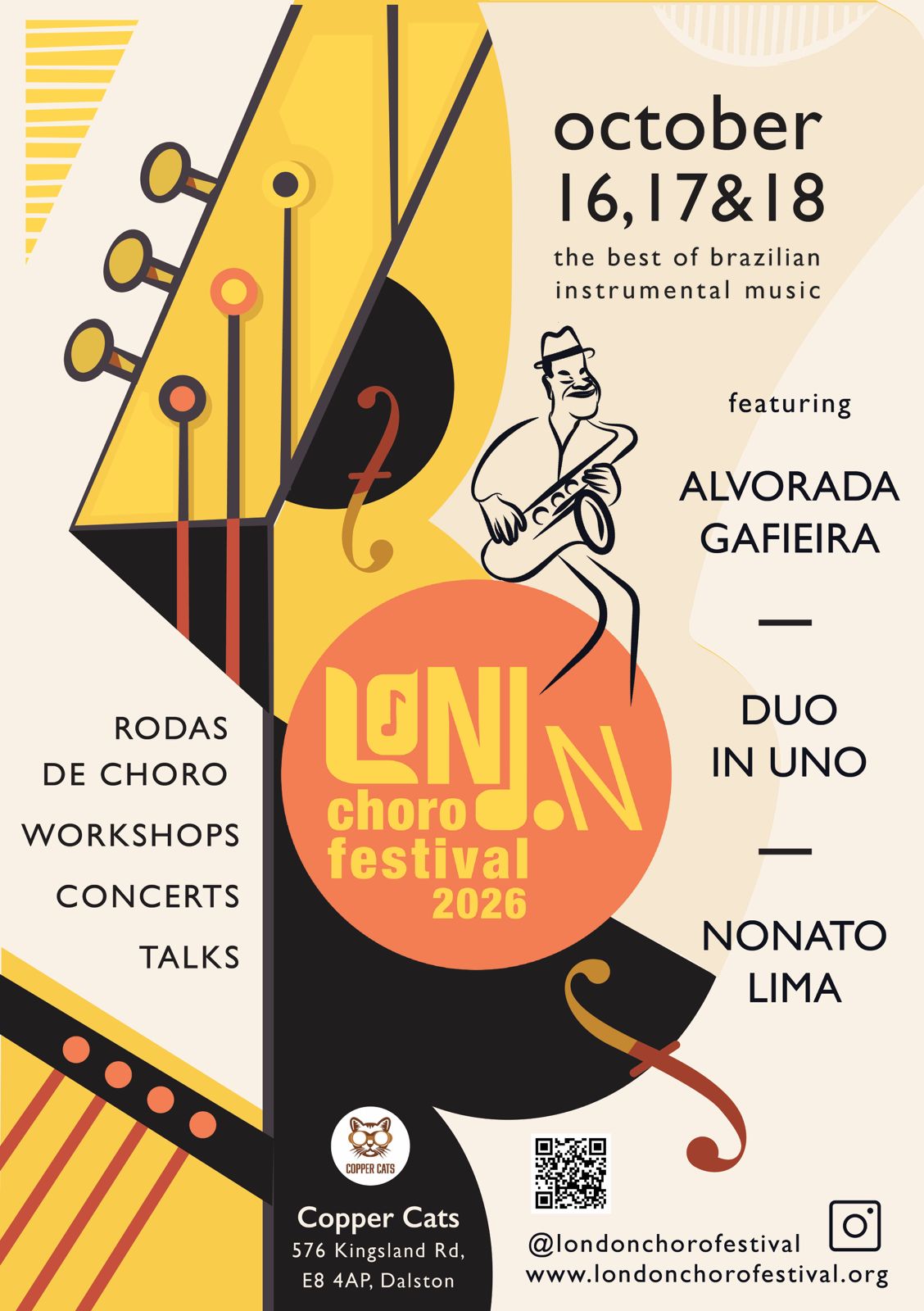
Their line-up draws on musicians from London, Brazil and Uruguay. Their debut, First Light (2019), set choro classics beside their own tunes. Faz Tempo (2024) is almost all original writing, pulling in xote, samba, bossa nova and baião, with room for jazz improvisation and a take on Caetano Veloso’s “Sampa” where all four melody and harmony players improvise at once. For the opener they swell into a gafieira band, adding trombone, bass and a second percussionist. Gafieira is the dance-hall sound where choro meets samba with a big-band punch. Part of the set goes to Moacir Santos, the Pernambuco-born composer and arranger who would have turned 100 this July. His 1965 album Coisas became a landmark of Brazilian music.
Saturday’s concert heads to the Brazilian Northeast, where the accordion drives baião, xote and forró. Nonato Lima, from Ceará, was playing professionally at 12 and served as a staff accordionist in forró bands. Dominguinhos saw him on television and asked him to accompany his shows, and Lima still keeps Dominguinhos in his repertoire as a tribute. He has played the São João season with Ivete Sangalo’s band since 2023 and recorded the xote “Bateu Saudade” with her in 2025. His own records head somewhere more exploratory. Brasiliando (2019), his first album of original compositions, travels between forró, choro and jazz, built on improvisation and richer harmony. In Dalston he plays as a trio with Luiz Morais, Alvorada’s seven-string guitarist, and Adriano Adewale, a São Paulo-born percussionist, based in the UK since 2000, known for coaxing sounds out of natural materials.
Closing night on Sunday brings Duo In Uno from Paris, where Italian saxophonist Giulia Tamanini and Brazilian seven-string guitarist José Ferreira met while studying and started playing together in 2014. With only two instruments, the seven-string does the work of a whole rhythm section, holding the bass and the harmony while Tamanini’s soprano or tenor carries the tune. Their repertoire runs through choro, frevo and baião, putting pieces by Hamilton de Holanda, Egberto Gismonti and Sergio Assad next to Pixinguinha and Dominguinhos. Nosso Canto (2025) gathers tunes they have played together for years, mixing instrumental pieces with arrangements of Brazilian songs, where arrangement and improvisation run into each other.
The festival’s artists also run hands-on workshops on Saturday and Sunday for anyone who wants to play choro as well as hear it, at every level, non-musicians included.
On Saturday morning, Adewale leads a pandeiro workshop on Afro-Brazilian grooves at Copper Cats (bring your own drum if you have one). Across town, Jonathan Preiss digs into baixaria, the seven-string guitar’s bass-line language, at The Muddy Puddle, a garden venue in N16. In the afternoon, Duo In Uno work on phrasing and the give-and-take between soloist and accompanist in a private home in N1.
Sunday opens with Dr Vinicius de Carvalho of King’s College London giving a free talk on Pixinguinha, the Rio flautist and composer behind “Carinhoso”, whose birthday Brazil celebrates as National Choro Day, with live examples, coffee and cake. In the afternoon, Lima unpicks the links between baião, xote, forró and choro back at The Muddy Puddle.
Bring a pandeiro, a flute or just a pair of ears, pull up a chair at the circle
and book through the London Choro Festival website