

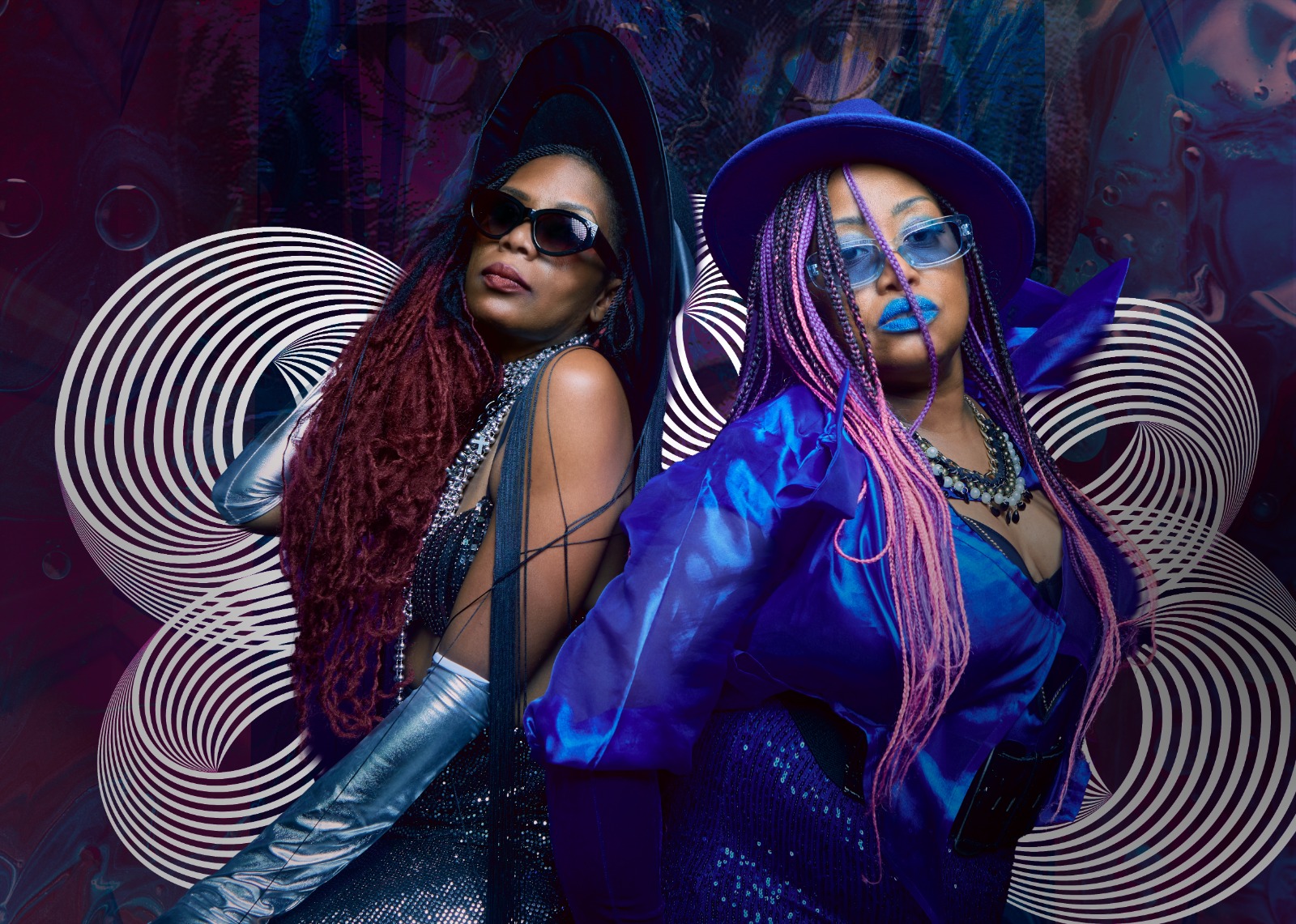
In 2014, Martha “Martica” Galarraga and Eliene Castillo crossed paths in Montpellier. Both were Cuban, both were singers, and both had already spent years working alongside heavyweights of the island’s music scene: Omar Sosa, Chucho Valdés, Silvio Rodríguez… But it took a few more years, and a push from their manager Hervé Parent at KaRu Prod, before the idea of forming a duo actually took shape. Part of the push came from a clear imbalance: too few women were visible in the French Latin music circuit. What emerged from that was a duo with a much broader musical and political identity of its own.
Las Panteras take the panther as a figure of resistance, survival and freedom, and build from there: Afro-Cuban percussion, jazz harmony, rap, electronic textures, and lyrics shaped by Yoruba spirituality, daily struggle and women’s lives. Their songs turn towards street vendors, ancestors, orishas, and women too often dismissed or overlooked.
Their upcoming debut album Hasta Cuando, out on 7 November, brings that language into full-length form, from Yoruba invocation to songs rooted in women’s work, survival and self-definition.
On the eve of the release of their new single “Apretaito”, we reached out to Martha and Eliene for a Q&A about Cuba, feminism, freedom and finding their own path…
You met in Montpellier and quickly formed Las Panteras. What was it about that first connection that made the project feel urgent or necessary?
We met in 2014, but what made Las Panteras possible, years later, was that Eliene was already an artist with the KaRu Prod agency. Then our manager explained the need to create a women-led project, given the lack of female voices in the French market. Even when we first met, though, the idea of joining forces artistically came up almost immediately.
Your music blends Afro-Cuban percussion with jazz arrangements, electronic textures and vocal improvisation. How do you develop that sound together: through instinct, discussion, or trial and error?
Natural instinct, based on our musical experience. It is a cocktail of ingredients, with discussion between the four core members of the project: Hervé Parent, Eliene, Martha, and especially Guillaume Bouthié, with his innovative contribution to the compositions.
The symbolism of the panther runs deep in your work. What does that image allow you to express musically, politically, and personally?
The symbol of the panther allowed us to express ourselves musically with the same speed and strength we put into making the album.
Eliene: Personally, it means punk spirit, a spirit of survival, and freedom.
Martha: It means confidence and Black consciousness.
Politically, for both of us, it means freedom of expression, justice, and respect for women.
“Hasta Cuando” came out just before International Women’s Day. What questions are you posing with that track, and who are they addressed to?
It felt important to highlight women on International Women’s Day, making a call for awareness around the discrimination and devaluation women face around the world.
In “La Vendedora”, you give voice to working women often overlooked in popular culture. What role do real-life women play in shaping your lyrics?
It is about the role of Cuban women within the culture, as street vendors during a difficult period of survival. As basic needs increase because of the national economy, faith and belief also grow stronger. Offerings such as flowers and fruit for the divinities that are part of our religious practices can never be missing.
How does Yoruba spirituality, especially the idea of destiny and ancestral guidance, inform the way you approach performance and creativity?
When human beings feel lost, they look for answers in nature. That is what Yoruba culture and its spiritual traditions represent for us, a legacy left by our ancestors.
Orúnmila, for example, means “the one from the sky who sent the omen”. It is the divinity we pray to so that we may reach a good destiny.
Creativity comes from the spiritual inspiration our ancestors give us.
Martha: My paternal great-grandmother, born in Lagos, Nigeria, was enslaved. She taught my father, Lázaro Galarraga, the Yoruba language. It is my responsibility to continue my ancestor’s legacy.
Eliene: One of the things that makes our project different from others is its spiritual essence. This is where I began to learn about the importance, philosophy, and depth of our traditions.
You have both broken away from limiting traditions: Martha from folkloric conservatism, Eliene from academic jazz. What kind of freedom are you trying to claim through Las Panteras?
Musical freedom, without searching for one specific style.
Freedom of expression, so that our lyrics and music can travel across the world.
Aesthetic freedom.
France is your current base. How does living and creating in Perpignan shape the music you are making now?
Perpignan opened doors for us. It is where our production agency is based, and also where our manager, Hervé Parent, is based.
Casa Musicale has supported your development as a duo. What role has that space played in your journey: creatively, professionally, and spiritually?
Casa Musicale was an opening for us, because our manager worked there for many years.
The Ida y Vuelta festival promotes and supports the development of artists from different musical genres.
Cuba remains central to your identity. How do you stay connected to the island musically, politically, and emotionally while living in Europe?
The connection to Cuba will always exist because, even though we live outside the island, we always represent our musical identity in the world.
Emotionally, we remember our homeland through gatherings with the Cuban community, Creole food, traditional games, events, Afro-Cuban festivals, and more. That is how we keep our essence.
At the same time, you’ve worked with icons like Omar Sosa and Chucho Valdés. How have those experiences shaped what you do as Las Panteras?
Eliene: Having been part of the vocal quartet Sexto Sentido, mentored by Chucho Valdés, gave me the experience that allows me to bring rigour, professionalism, and a way of approaching vocal arrangements.
Martha: When I met Omar Sosa, it opened up a musical path without losing the Afro-Cuban essence, while bringing in the influence and freedom of jazz and improvisation.
What artists or albums, past or present, have surprised or inspired you during the making of “Orunmila”?
Regarding the track “Orunmila”, it is a tribute to all Babalawos, “fathers of secrets”, and the highest authority within the Osha and Ifá religious systems. We were not inspired by any specific album or artist. We simply wanted to thank the divinity Orúnmila through music, the one who guides us towards a good destiny if we listen to that guidance.
Your styling is bold and unmissable: braids, sequins, colour. How does your visual language connect to your message as feminists and performers?
We identify as feminists, and that does not mean we stop being feminine or dressing the way we like: sexy, with nails, braids, and extravagant colours. Feminism, for us, means defending our values and our place in society, being who we want to be and thinking how we want to think. That is a right.
Looking ahead, what are you most excited to create or share, on stage, on record, or in collaboration with others?
Looking to the future, we would be excited both to create and to share the stage with other artists.
We usually finish our interviews with a tricky one. How would you describe Las Panteras and your sound to someone hearing you for the first time?
We describe Las Panteras with the concept of “Afropunk Latino”.
For someone hearing us for the first time, we would say: our roots are African, our trunk is in Cuba, our branches move between funk, reggae, and soul. Our message is Afro-Latino feminism.
Las Panteras' EP Orunmila was released on 6 June
Their debut album Hasta Cuando follows on 7 November via KaRu Prod
Cover Photo ©: Lhia Farfalla