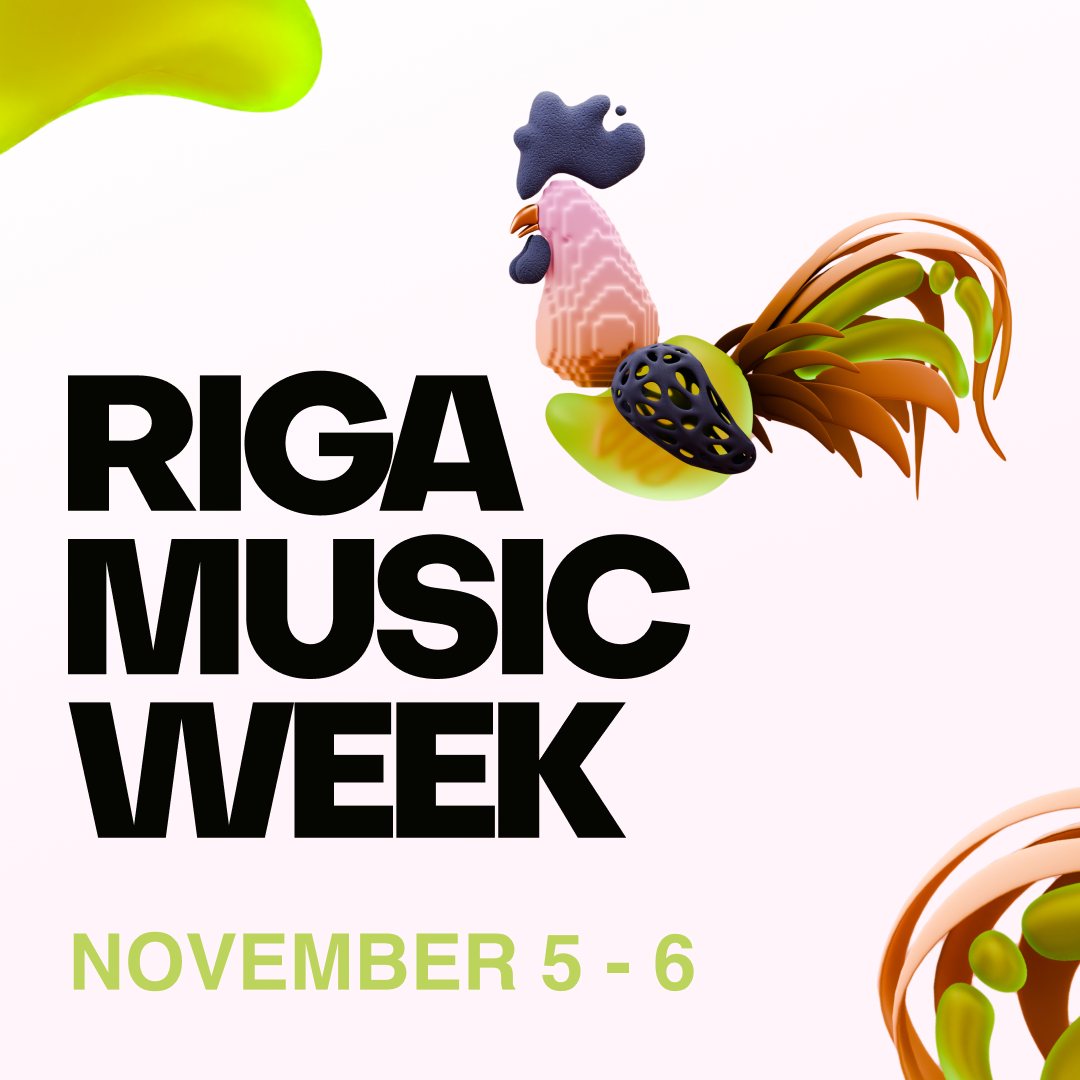
November in Riga arrives with that cold, blue light that hangs low over the Daugava. You walk through the centre, past the cold breath of the canal, between Soviet blocks and Art Nouveau ghosts, and end up in Tallinas Ielas Kvartāls, a maze of old workshops turned into the city’s beating heart for live music and half-finished ideas.
The worn-brick hangars of Tallinas still whisper of industrial histories long past, but on 5–6 November they’ll turn into a hearth for the Baltic music scene. The first Riga Music Week (RMW) stretches across two days and two nights of concerts, conversations and cross-border collaboration, where Latvian techno-jazz meets Lithuanian indie-soul, Estonian folktronica collides with Ukrainian art-rock, and conferences crack open doors that often stay locked.
It’s a setting that fits the moment. Riga’s musical life has always thrived on contrasts: choirs and jazz bands, warehouse raves and chamber halls, DIY collectives beside conservatory graduates who prefer to improvise than conform. The Tallinas block mirrors that spirit: once grey workshops, now a living campus of rehearsal rooms, food stalls, galleries and late-night spaces where music seeps through brick. For the festival, the whole area becomes an improvised city within the city, humming from midday panels to dawn gigs and DJ-sets.
That’s where Riga Music Week begins. Not as some slick showcase, but as a patchwork gathering: two nights where the Baltic region throws itself together to see what sticks. Latvia, Lithuania, Estonia, and the neighbours just beyond, each sending a few of their best and strangest to the capital.
Over 50 artists fill the programme, each adding a distinct accent to this evolving map. The line-up emerged from over 400 submissions spanning 38 countries. Each stage has been curated by a Baltic partner — Radio SWH, Summer Sound Festival, I Love You Records and Sofar Sounds Riga — shaping the festival as a network of scenes in dialogue instead of a conventional showcase festival.
Latvia anchors the weekend with a set of artists that define its current sound. Tautumeitas rework traditional harmonies into propulsive, modern forms, blending folklore with drum machines and taut vocal interplay. Saxophonist Toms Rudzinskis pushes jazz beyond its edges, building intricate compositions that cut clean through improvisation. Very Cool People bring brass-driven funk and a rough humour rooted in Riga’s bar-band scene, while Kristīne Prauliņa and her Soulful Crew fuse gospel phrasing with a sleek, R&B frame.
From across the border, Lithuania contributes its own textures: Nika Ganga’s velvet tone floats over live percussion and electronics, moving between jazz phrasing and neo-soul ease. Kabloonak crafts cinematic folk stories through soft guitar work and hushed delivery, his songs balancing fragility and narrative weight. Ingaja pares her sound to piano, voice and ambient electronics, building quiet tension from restraint and stillness.
While, to the north, Estonia adds texture and contrast. OOPUS stand out with immersive folktronica shows that merge traditional instruments and analog electronics into hypnotic rhythm. Bagpipes, flutes, and synths loop around live visuals and a dancer who turns movement into part of the sound, pulling ancient melody and digital circuitry into the same frame.
Guitarist-composer Erki Pärnoja shapes instrumental landscapes that shift between post-rock scale and meditative calm, while Mariin K’s dream-pop phrasing brings a light melodic touch to layered guitars and synth haze. Then there’s Alika, one of the region’s breakout voices, bridges Idol, Eurovision, and a multilingual debut album that carries her sound across borders.
Further afield, the frame expands: Kyiv’s Ziferblat bring urgent, emotionally charged art-rock; Ireland’s Melina Malone traces R&B through the grain of Dublin’s underground; Poland’s sneaky jesus play with the boundaries of instrumental jazz; and Nottingham trio Eyre Llew build soaring, weight-heavy post-rock. Together, they turn Riga into a meeting point: Baltic roots conversing with wider Europe.
Daylight brings a different rhythm. The same spaces that hosted bands now hold panels: people talking sync deals, AI, export. You pass through for the coffee and catch fragments of sentences: “the Baltic market”, “European funding structure”, “AI’s impact on creativity”, “audience-building strategies”, “visibility”. While, out the window, someone’s already hauling drum cases across the yard for soundcheck…
Speakers include LisaNasta of Glastonbury, MarkBona of Sziget, Eurosonic’s RobertMeijerink, and KEXP’s DarekMazzone. Names that suggest RMW wants to move conversation as well as sound. The schedule runs across Angārs Main, Ezītis Miglā, and other downtown spaces, while the adjoining SINTĒZE tech exhibition presents new hardware and software for producers and live performers.
Riga Music Week grew out of the work of Agnese Cimuška-Rekke, head of Music Latvia, the country’s central music-export platform. Developed with Kompānija NA and supported by Riga City Council, LaIPA, and AKKA/LAA, the festival grows out of a decade of cultural momentum that has reshaped Latvia’s musical landscape. Across the Baltics, scenes built from folk traditions, jazz, indie and electronic forms have been expanding and overlapping, yet the capital had long lacked a single space to bring them together and show that evolution to the wider world.
What makes this week matter is simple: Riga finally sounds like itself. The city’s always had choirs, conservatories, basement jazz bars, and DIY corners, but they’ve rarely shared the same room. RMW does that. It’s not about scale or polish: it’s about connection, people showing up, ideas passing hand to hand.
What comes next decides what it becomes: the collaborations, the tours, the things that stick. Riga doesn’t need another export project; it needs noise, risk, and exchange. For two nights in November, in that courtyard of brick and warm light, it gets exactly that.
Riga Music Week takes place 4–6 November at Tallinas Ielas Kvartāls
Tickets & delegate passes are available HERE