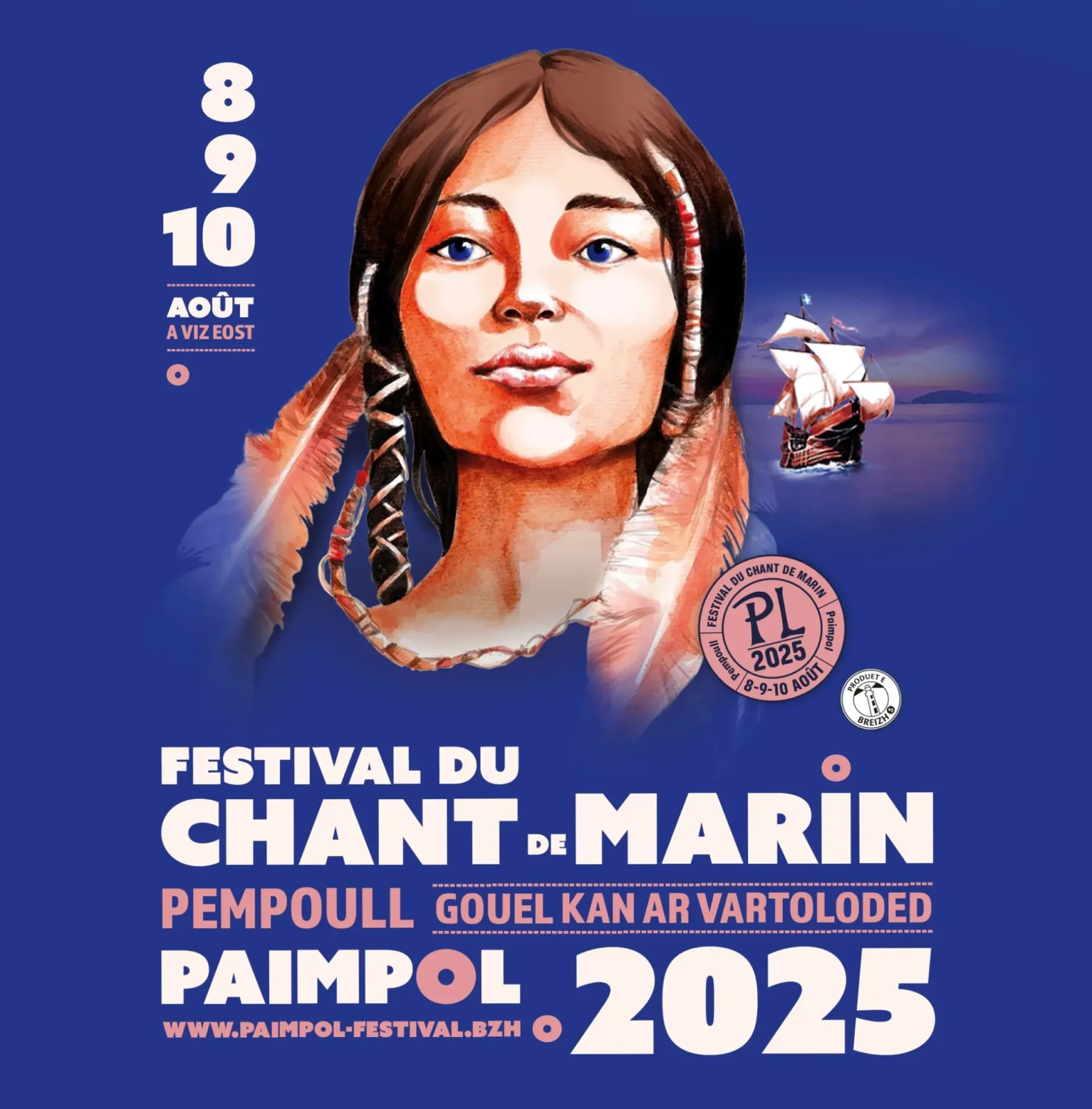

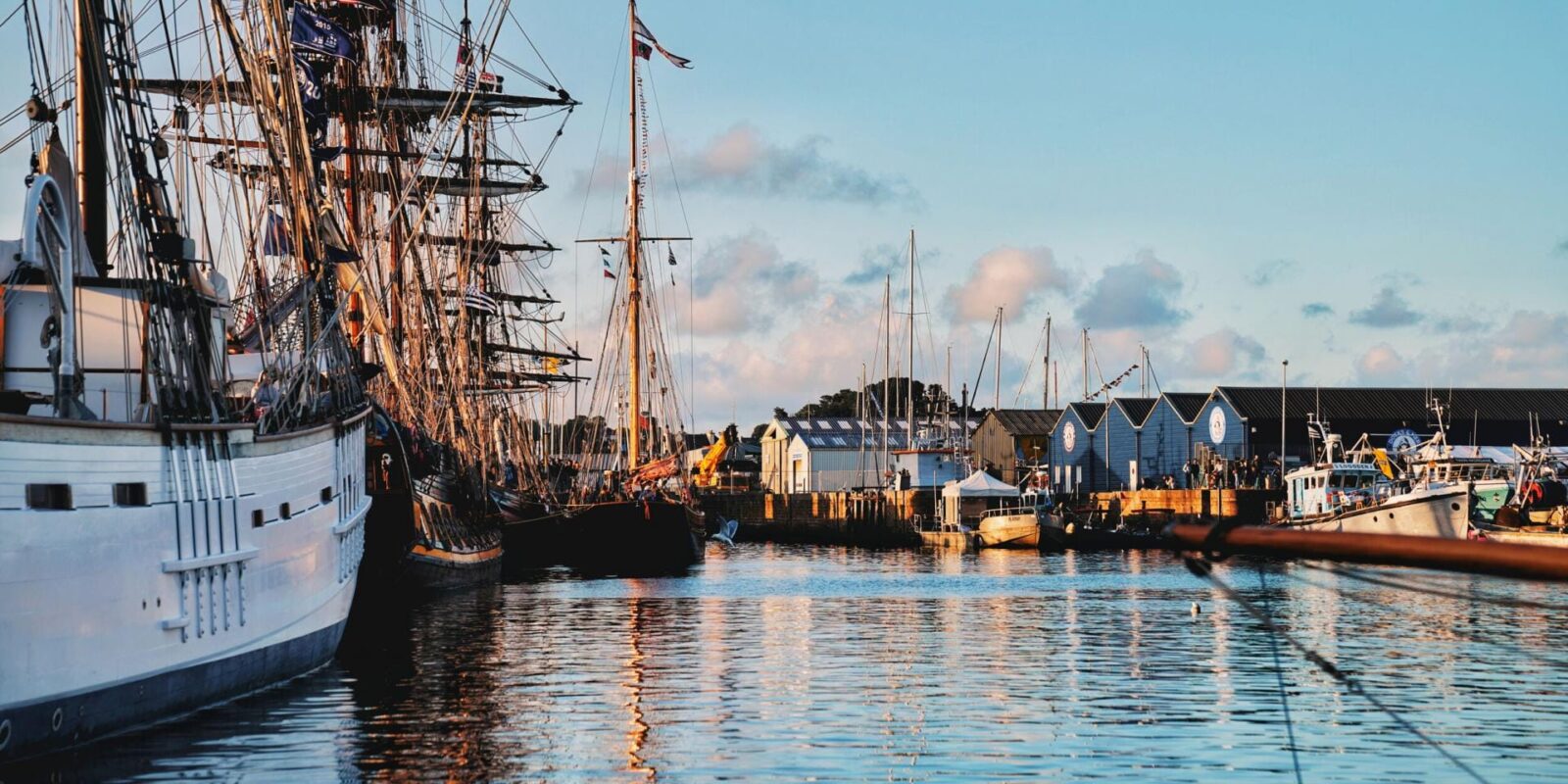
Every other August, the quays of Paimpol fill with foghorns, sailcloth and voices in harmony. Brittany’s northern coast lifts anchor and moves towards the music, and the Festival du Chant de Marin carries its legacy forward: part working port, part open-air stage, part gathering of coastal cultures.
For its sixteenth edition, the festival sets course for Quebec. The St Lawrence and the Goëlo coasts share more than history. For decades, Saint Jean Port Joli and Paimpol have exchanged artists, stories and maritime traditions. This year brings Quebec’s musical imagination to the forefront, with a focus on seafaring communities, First Nations voices and the folk languages of the province.
The festival opens on Thursday with a powerful sense of arrival. Crews aboard two hundred heritage vessels sound their foghorns at dawn, filling the harbour with deep, resonant calls. Throughout the day, ships from across Europe and the Atlantic dock along the quays, setting the stage for the traditional repas des équipages: a shared evening meal that brings together sailors, organisers and townsfolk. The music begins to rise informally from the decks and taverns, setting the tone for four days of performances, parades, and full-port celebration.
From Friday to Sunday, the festival unfolds across the port, the town and the water. Dozens of stages and spaces host performances, from main-stage headline sets to impromptu singalongs on ship decks and tavern floors. The harbour itself becomes a living backdrop: two hundred heritage boats arrive from across Europe, their crews joining the music with foghorn concerts at dawn and shared meals under sail. Along the quays, fest-noz dancing, processions of bagadoù, street theatre, craft stalls, youth workshops and tastings of local produce all contribute to a rhythm that is as communal as it is musical.
Le Vent du Nord ignite the Friday 8 August programme with a powerful, instrumentally rich set shaped by foot percussion, bouzouki, accordion and tight call-and-response harmonies. Based in Quebec, the group have redefined French Canadian folk for a new generation, grounding high-energy live performances in the dance rhythms and melodic lines of traditional reels.
Later that evening, Ayo steps in with a stripped-down blend of soul, acoustic folk and Franco-Nigerian rhythm. Her voice carries clarity and weight, shaping personal stories into understated ballads. The Limiñanas close the Friday main stage with a raw, fuzz-drenched take on garage rock, looping vintage French psychedelia into a live set that leans on groove, repetition and cinematic tension.
On Saturday 9 August, the line-up stretches across continents. Fatoumata Diawara, one of Mali’s most vital voices, brings her signature blend of Wassoulou tradition and electric guitar, backed by a band that swings between pan-African funk and tightly arranged pop. Earlier in the day, Delgres offer a deep rhythmic charge drawn from Guadeloupean blues. The Paris-based trio strip things down to distorted slide guitar, sousaphone basslines and Creole vocals shaped by histories of resistance and migration.
Saturday also features a late-night set from Mitsune, a Berlin-based trio built around the Japanese shamisen. Their approach feels both rooted and cinematic — weaving folk scales and percussive phrasing into lush arrangements that drift between psych rock and Eastern European modality.
On the same night, Denez presents Toenn-Vor, a performance rooted in gwerzioù — Breton sung poetry — reimagined with electronic atmospheres and immersive visuals. A central figure in Brittany’s musical renaissance, Denez draws power from language and lament, placing Breton identity into dialogue with contemporary form.
Tiken Jah Fakoly takes the stage on Sunday 10 August with politically charged lyrics and heavy roots reggae that have echoed across West Africa for over two decades. Born in Côte d’Ivoire, he threads classic reggae instrumentation through Mandé rhythms and pan-African urgency.
That same day, Emily Loizeau brings her theatrical chanson to the stage, folding piano-led composition into songs shaped by literary narrative and political insight. Soviet Suprem close the weekend with a brass-charged, tongue-in-cheek blitz of Balkan rhythms, MC theatrics and faux-Soviet agitprop — a live show built for chaos, irony and dancing.
Quebec’s experimental scene also finds space across the weekend. On Sunday, Klô Pelgag arrives with orchestral pop that slips between surrealism, cabaret and modern chanson. Her songs blur the boundary between dream and arrangement, building lush musical worlds from highly visual lyrics. Throughout the weekend, Katia Rock, a singer of Innu heritage, brings a grounded and vital presence, merging traditional songs with electronic textures and spoken word in both Innu and French.
The sea still sings at the heart of the festival. More than sixty vocal ensembles gather throughput the long weekend across Paimpol — on decks, in taverns, along the quays — giving breath to the work songs that once lifted sail and hauled line. Voices rise in chorus, rough-edged or refined, echoing through wooden hulls and harbour walls. Groups like The London Sea Shanty Collective, Les Gabiers d’Aquilon and She Shanties hold that legacy in multiple forms, carrying the physical pulse of maritime song into new contexts.
The harbour becomes part of the stage and the score. Two hundred traditional vessels dock throughout the port — schooners, cutters, sail-and-oar craft — with crews joining the foghorn choruses at dawn and filling the docks with movement. Mornings crack with signal horns, shifting hulls and boots on timber. Nights build towards fest-noz dancing and brass lines ringing into the dark.
Breton identity runs through the festival site. Bilingual signage in French and Breton, the presence of local bagadoù, and producers from across the region root the experience in language and landscape. But this is no inward-looking event. The programme speaks across borders, embracing migration, transformation and cultural movement.
Paimpol is movement. Sailors and singers, languages and traditions, ships and voices come in on the tide and leave altered. Quebec brings its own weight to this edition, in rhythm, in story, in sound. Every arrival shifts the tide. Every set leaves its mark on the quay.
Explore the full programme & line-up
and get your day or weekend ticket HERE