

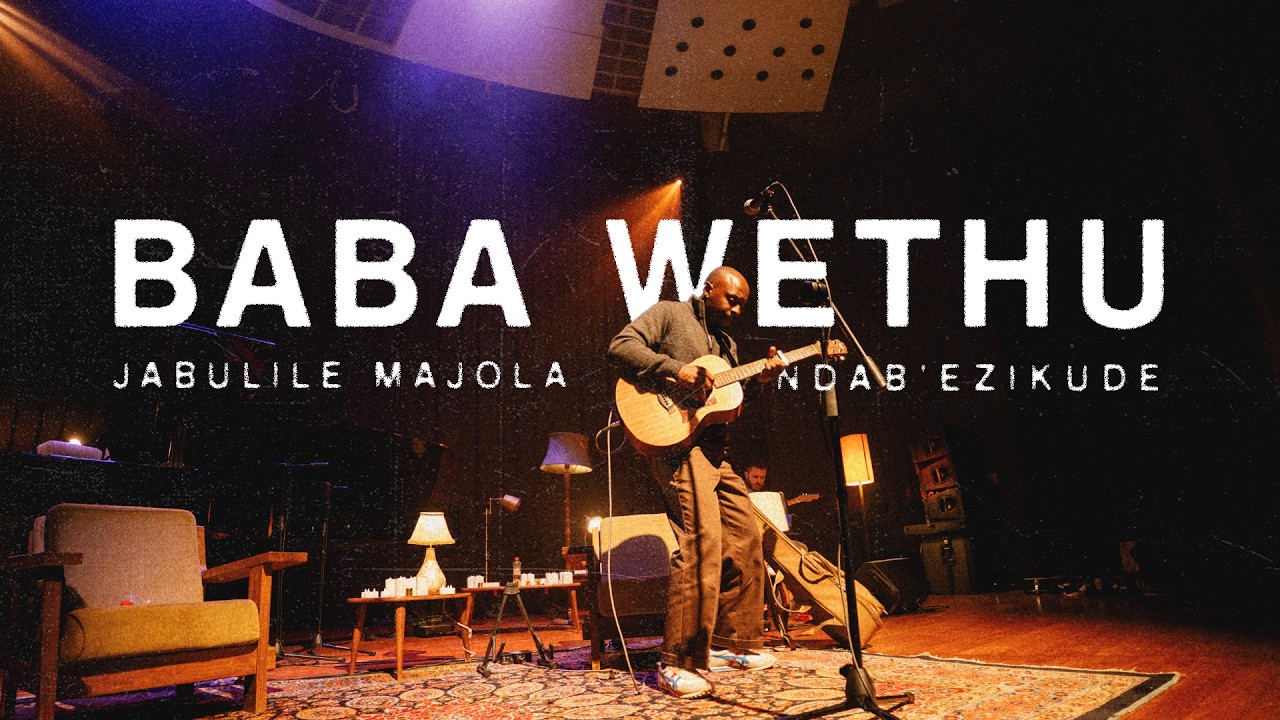
Jabulile Majola sings “Baba Wethu” as a dove worn down by its journey, “Ngijuba elifuna indawo yokuphumula“, crossing hills and gullies through steady rain in search of somewhere to rest. When the bird’s strength gives out it calls up to heaven, the same cry each time over a marching chant, “Ulaphi sekonakala“, “where are you when things fall apart”, to the Father the isiZulu title names.
The bird calling out for a Father is a boy who was left. The lyric opens on “Uthando lwangishiya ngisase mncane”, love left him while he was still a child, and he sings it from his own life: his mother vanished when he was days old, and by the age of two a pastor’s family was raising him among 26 children in rural Greytown, KwaZulu-Natal. He took the name she left him. It is all he has of her.
The prayer turns before it ends. Majola reaches for a hand, “esangithunga ndawonye”, the hand that stitched him together, and asks it to lead him through the mist and across to the far side, “Ithemba eliyongiwelisa ngaphesheya”, the hope that will carry him over. He opened the song too worn to go on and ends it asking to be carried the rest of the way.
He wrote “Baba Wethu” with his oldest brother, Levit Phungula. The song opens IPASI, his coming debut album, and follows his 2025 EP Isitifiketi.
The live take comes from the Baxter Theatre in Rondebosch, Cape Town, where Ross Dorkin of Cape Town afropop trio Beatenberg joins Majola on bass.
Stream and listen to “Baba Wethu” HERE