

For one long Bank Holiday Friday, a stretch of east London turned unmistakably verde-ouro. Boa Nova Festival, the capital’s first festival given over entirely to Brazilian music, landed at Leyton Jubilee Park, a sprawling, tree-lined community park, on Friday 22nd May, and even the weather played along: a hot, bright afternoon that felt closer to Recife than to Leyton. Across the site, two stages traded off with a roda de samba, food stalls sent up the smoke of churrasco while the queues for coxinha and warm pão de queijo snaked over the grass, a caipirinha bar and ice-cold Brahma cans kept the crowd watered, and over in the DJ tent baile funk thumped late into the evening.
Presented by The Columbo Group as part of the UK/Brazil Season of Culture, the debut bill was headlined by three artists who between them spanned the country’s sound: João Gomes‘ Northeastern piseiro, Liniker‘s São Paulo neo-soul, Mari Froes‘ samba-rooted MPB. It was proof of how deep Brazilian music now runs in London, and how ready the city was for a festival of its own.
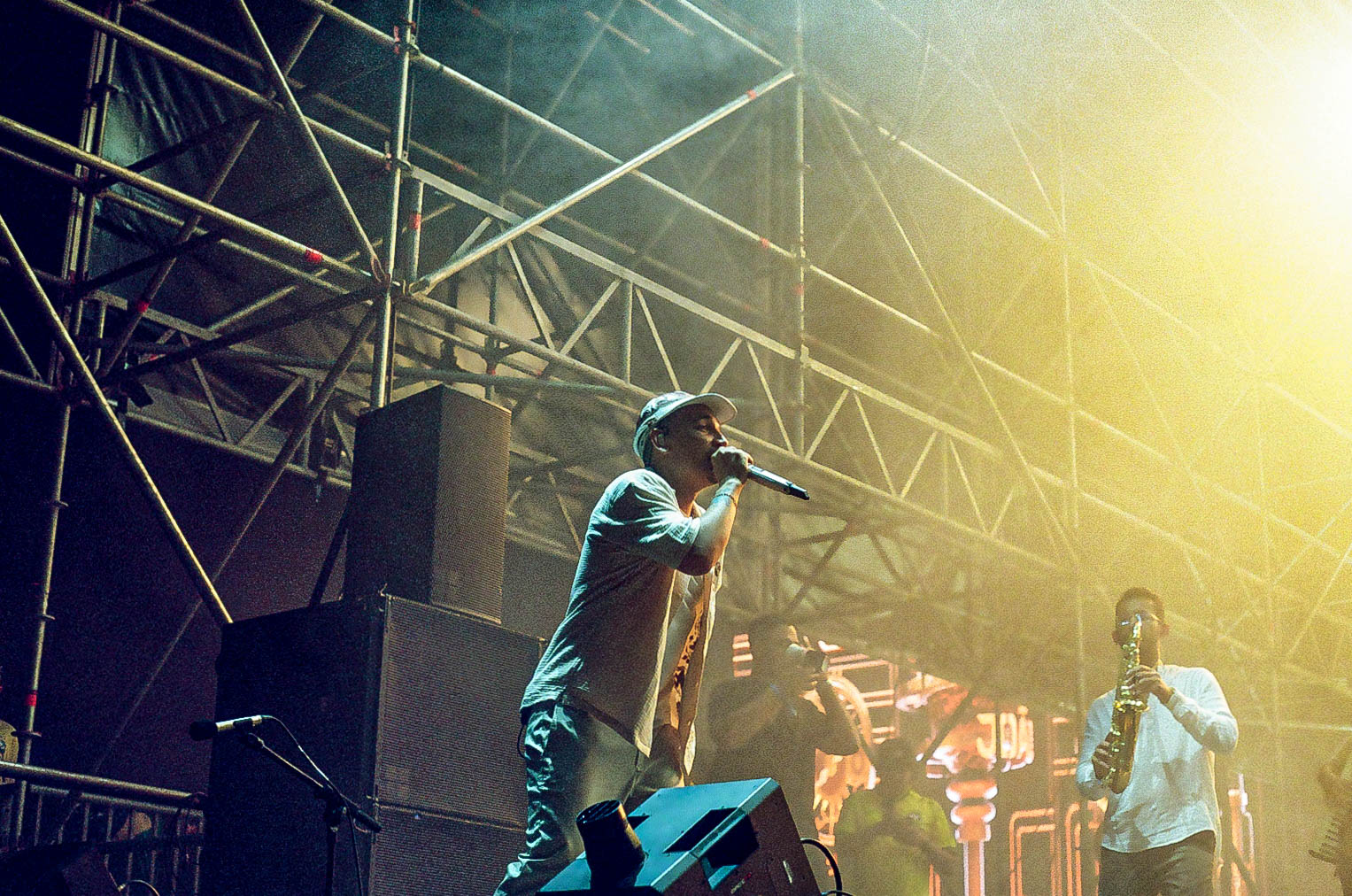 Photo © Kirsty Atkinson
As it was meant to be, no set hit harder than João Gomes’. The piseiro star from Serrita in Pernambuco delivered a set full of charisma and energy: alongside his biggest hits, he surprised the audience with inspired renditions of songs by Kid Abelha and Alceu Valença. Behind him, the screens filled with the imagery of the sertão: woodcut cordel prints, mandacaru cacti, the leather-hatted cangaceiros of the backlands, the whole imaginário nordestino lit up over a Leyton field. During the final section of his set, he transformed the festival into a true Brazilian June celebration, an energetic forró tribute to São João and the traditional Festa Junina, keeping the crowd singing and dancing until the very last note of the sanfona.
A few hours earlier, Liniker had taken the crowd somewhere completely different, though not, as you might assume, somewhere quieter. The Araraquara singer, the first trans woman to win a Latin Grammy (for Indigo Borboleta Anil) and now touring her acclaimed neo-soul record Caju, turned her set into a warm, groove-driven party, samba, jazz and R&B wrapped around that deep, smoky voice. Far from a hushed showcase, it was built to move, and thousands sang back to her throughout, making it one of the festival’s most communal, shared moments.
The day’s biggest discovery was Mari Froes, the youngest of the three headliners and, until recently, more of an up-and-coming internet phenomenon than a festival name. A singer-songwriter and guitarist working in samba– and bossa-tinged MPB, she broke through with a homemade cover of ‘Figa de Guiné‘, a samba standard nearly 60 years old, made famous by Alcione, that became the unlikely soundtrack to football highlight reels of Ronaldinho and Neymar, racking up tens of millions of views. Live, it’s that deep, soft voice and her guitar that do the work, though her more intimate reinterpretations had to fight harder for the field’s attention than the headliners’ grooves did, out in the daylight.
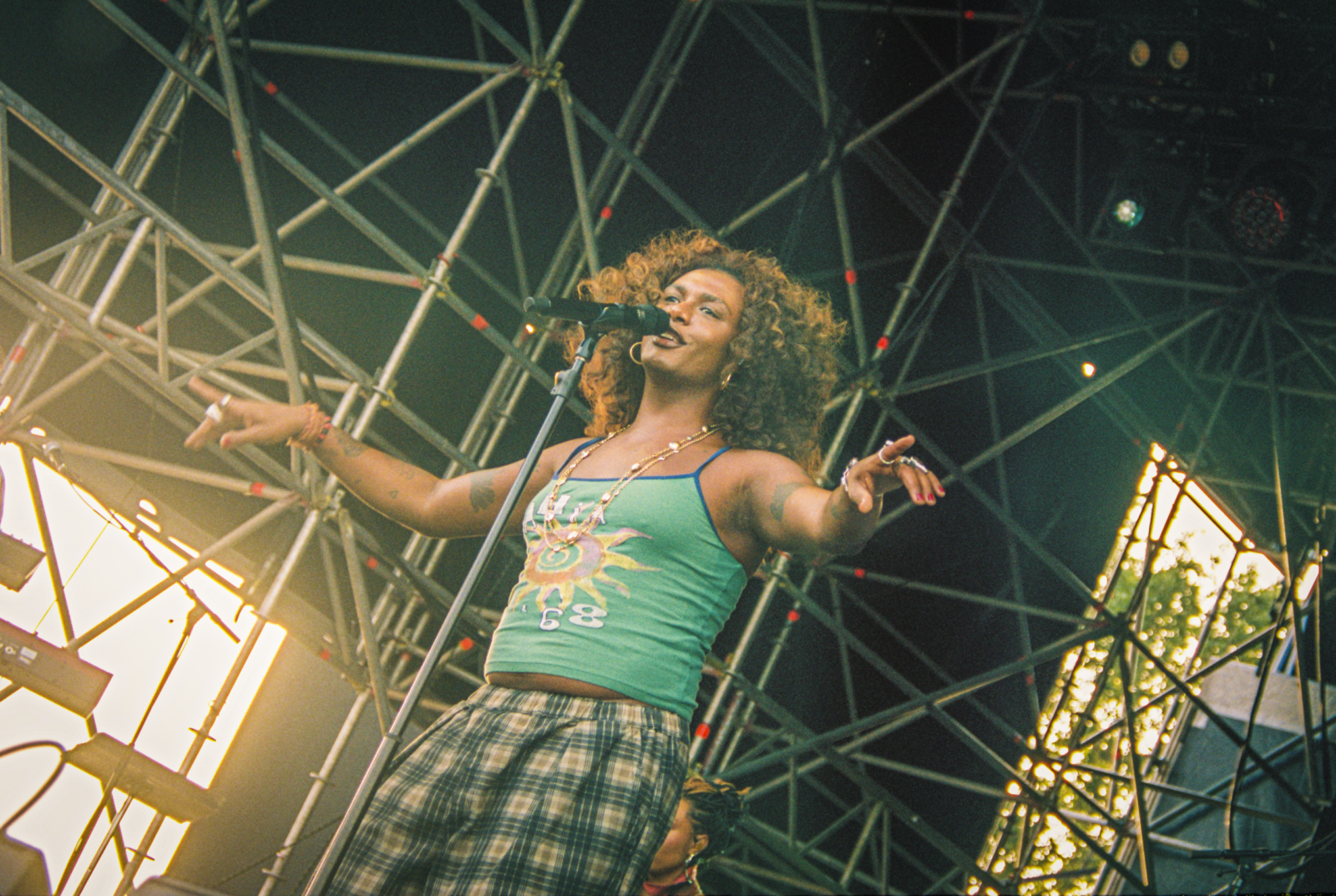 Photo © Alice Palm
The Baile Funk Culture tent was a festival within the festival. Run by the London platform behind years of Brazilian club nights across the city, it ran on its own clock and its own crowd, a sweat-box that pulled you in and didn’t let you back out. Caio Prince, Th4ys and Bronka worked the younger, harder end of baile funk, the favela-born sound of Rio now echoing through clubs worldwide, while Mango & Ginger kept the grooves rolling between them. Presiding over it all was DJ Patife, the veteran who helped invent Brazilian drum and bass in the late 1990s and whose liquid remix of ‘Sambassim‘ still lands, folding samba swing into rolling breakbeats. You could have spent the whole day in there and called it well spent.
It helped that the crowd felt at home. Thousands of Brazilians and curious Londoners shared the same food queues, the same flags and the same choruses, and the field doubled as a catwalk of seleção shirts, vintage R9 Ronaldos and Ronaldinhos next to box-fresh Vinícius Júniors and Endricks, every era of that famous yellow in one place. The teething troubles you’d expect of a first edition were there, the 40-minute wait for a coxinha chief among them, but they barely dented a day that felt both unmistakably Brazilian and entirely at home in London. Strong production, a well-chosen bill and a crowd that never flagged backed up Boa Nova‘s claim to be the most significant celebration of Brazilian music the UK has yet staged. Até 2027!
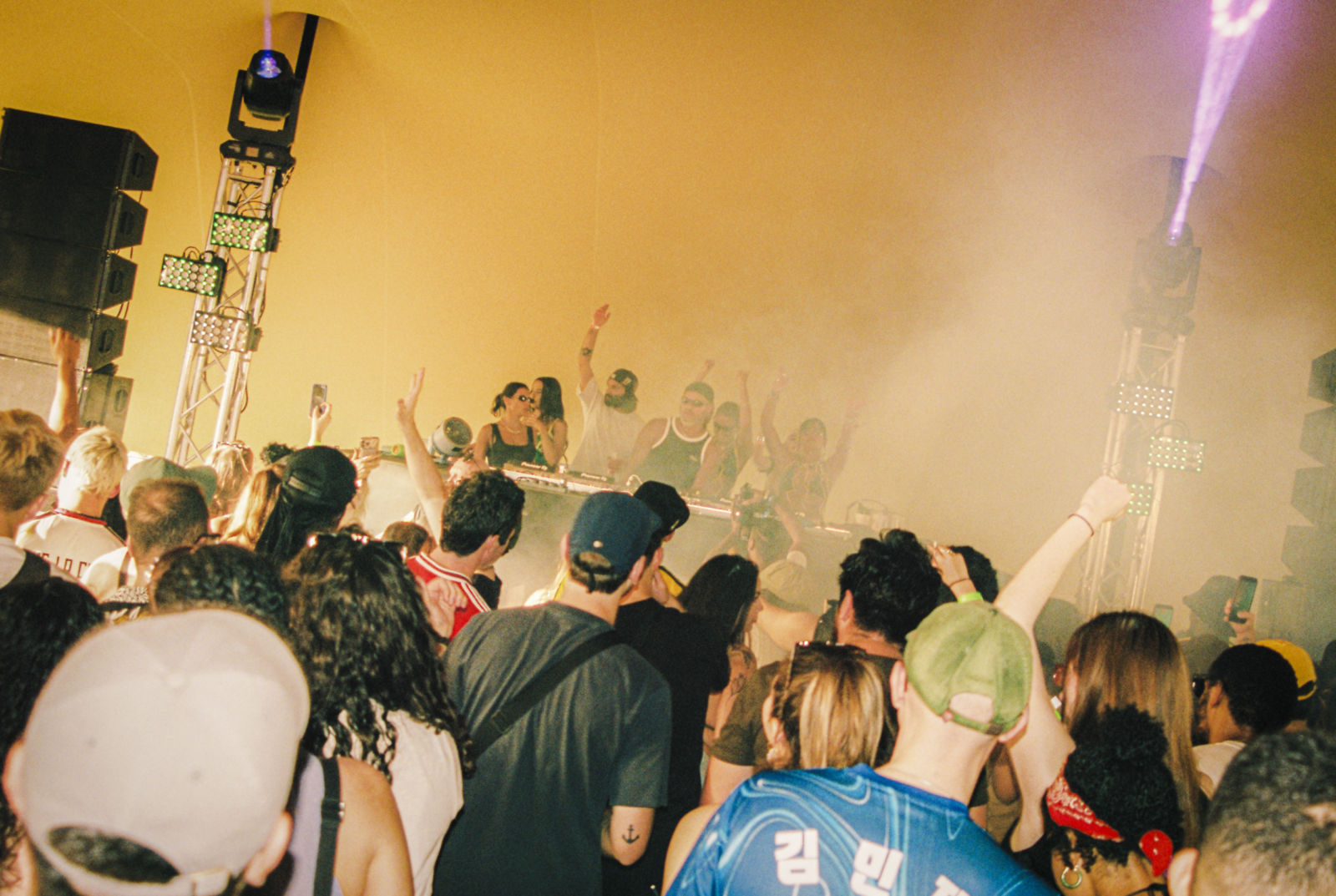 Photo © Alice Palm
Photos by: © Alastair Brooke, Alice Palm & Kirsty Atkinson