

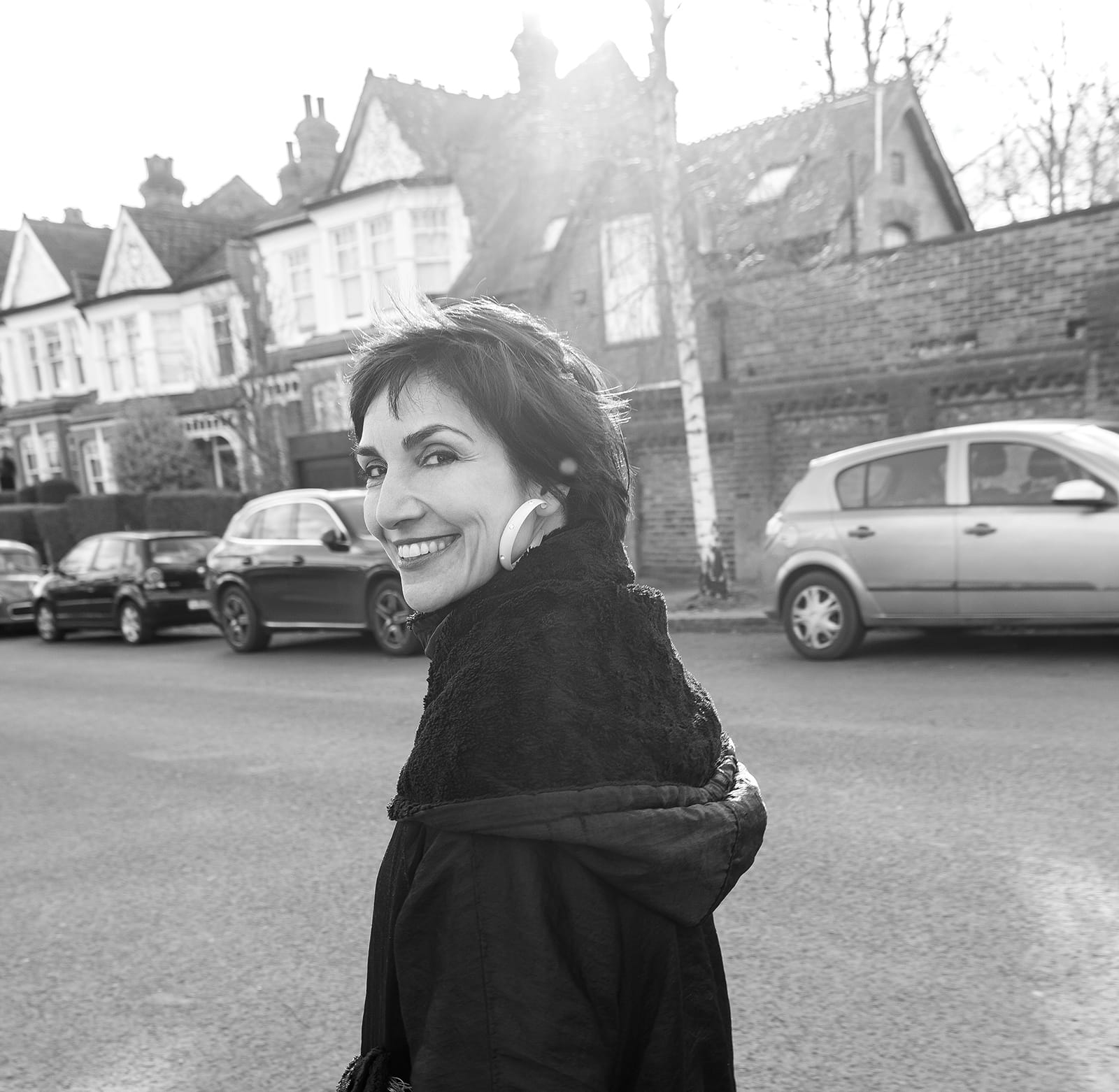
Based in London but shaped by her upbringing across Turkey, Djanan Turan has spent years navigating the edges of genre and geography. Her new album Love’s Company builds on a decade of boundary-crossing work, weaving Anatolian psychedelia, political folk, electronic textures and English-language songwriting into something unmistakably her own. Written in the stillness of lockdown and completed through open-ended sessions with a shifting cast of collaborators, the record captures a moment of sharp inward focus set against a world in flux.
Recent singles like “Yangın”, “Don’t Wanna Know” and “Pain Flower” open different windows into that landscape: songs of quiet defiance, uneasy tenderness and unresolved tension. Each track is marked by Turan’s direct lyrical voice and refusal to confine her music to one tradition or language. The live-session videos released in the run-up to the album amplify that atmosphere, placing traditional instruments and unfiltered performances within the collective hum of London’s Turkish, Kurdish and diasporic music scenes.
In this Q&A, she traces the making of Love’s Company, speaks to how the world seeps into her songs whether invited or not, and considers how London both expands and confines what’s possible for artists outside the mainstream.
Can you walk us through the journey of creating Love’s Company? What inspired its sound and the themes you explore throughout the album?
I started creating Love’s Company during the lockdown period. With my son just under two years old, lockdown provided me with the headspace and time I needed to focus on the songs and begin crafting them.
World events over the past decade have been unfolding in ways that make new realities increasingly apparent. Wars have become more normalised, mass movements of people continue, and the deep unfairness of the systems we’re all trying to be ‘human’ within is being revealed layer by layer.
On the other hand, I had my little beautiful life day to day, especially during the Covid-19 pandemic, when many of us began to realise just how important it is for every part of society to be well and cared for. Having a baby during this time also opened my eyes to the generosity and kindness from strangers, which seemed to bring out the best in people. The contrast between the overwhelming, chaotic global picture and the quiet, safe life I was living became the source of inspiration for these songs.
Your work often fuses Turkish musical traditions with contemporary and more pop-oriented arrangements. How do you approach balancing these influences while keeping your music fresh and authentic?
Thank you very much. I’m pleased to hear that it sounds fresh and authentic. This is the inevitable result of growing up in Turkey and genuinely loving and devouring many different musical styles from a very young age. I started singing at 14 in a rock band with my schoolmates and provided entertainment for guests at our motel in the summers, covering everything from pop to Turkish classical. When I arrived in London, I learned a very different repertoire just to get by. Having devoured so much music, I think that naturally brought out this sound.
Reflecting on your journey from Adana to Istanbul and eventually London, how have these different places shaped your identity as an artist and the music you create?
My journey started in Samsun, in Turkey’s Black Sea region. Then it was Adana, and for summers, a little village called Kızkalesi, before finally London. All these places had a massive influence on my music. They each had really different characters in how the community worked and the sounds around. It involved a lot of losing and finding.
Samsun was full of mosques. You’d be completely immersed in the sound of the prayer, five times a day, coming from several places at once. Adana didn’t have much of a religious population, so all the ezan (prayers) disappeared, but there was a lot of rock music. The summer place, where my mum managed a hotel, was an exciting sonic mess. It was a small holiday village where, by evening, everyone would boost their sound systems (not exactly high-quality ones!). It would be a very trippy sound. Imagine “Macarena” and Dr. Alban repeats in the background. The disco playlist would be about 10 hits over and over again until 5AM, with some folk singer wailing super dramatically from somewhere, and the prayer from the mosque doing a duet with “I Will Always Love You”! Within this mess, I had the chance to find treasures from Turkish immigrants from Germany and American pilots from the base, especially reggae, rap and hip-hop that we didn’t hear much of back then. I used to record their collections on tapes. Before the internet, and with very limited MTV, music had to travel or you had to go and find it, and I would put a lot of effort into finding music to keep myself inspired.
London was an incredible eye-opener. Of course, we always heard music from England. I loved Pink Floyd, Queen, Iron Maiden, Björk and all that. But discovering the whole ecosystem underneath it, with all the thousands of small contributors, was amazing. When I arrived, it was a time when there was music everywhere: streets, bars, house parties. And I felt that strong sense of freedom, like I could make my own little sonic universe here.
Your music touches on profound themes like love and politics. How do you manage to weave these powerful ideas together so seamlessly in your songwriting?
I don’t think that I am actually managing it, sadly. Writing about politics has become unavoidable. I don’t actually even consider myself to be writing about politics. I want us to be good to each other, make the most of this beautiful life, and let others also enjoy their life. So they are still love songs to me. I have a big resentment for humanity, while I love humans. I love people: the potential we have, our quirks, big desires, insecurities, grandness and helplessness.
I come from the big influence of the ’90s, you know, “the world is your oyster if you work hard.” We always had political Turkish music in our house, like Zülfü Livaneli, Ahmet Kaya, and Yeni Türkü, but my parents didn’t really talk about politics. Yet they had a lot of hardship, which is of course also an outcome of politics. Life shows you that politics is bloody everything: every step one can take or not. It dictates whether a community can do better, solve crime, keep safe, whether your house is warm in winter or not, whether you can study well, it’s everywhere. And it’s stupid. When you realise every day that all these things that could be solved nicely and easily with a little bit of solidarity are treated as ‘endemic’, you really want to say things. For me, let’s get all the obstacles that politics creates out of the way, at least, and then see again what happens.
The album delves into deeply emotional topics like displacement, fear and resilience. Was there a specific moment, event or personal experience that shaped this thematic direction?
In the summer town I mentioned earlier, we had the US F-16 jets flying over our heads all summer long, with that horrific, roaring sound as they headed east. We lived under this accepted order of the US “keeping things in place.” Still, there was some hope that maybe someday there would be no fighting at all and everyone would be equal.
For a brief period, ordinary people like myself somewhat believed that the global systems were working towards that. But the Iraq War shattered my mental health. Turkey opened its borders and took in 4 million refugees fleeing from the war in Syria. I think being Turkish, and going back and forth there, made everything more real.
Then we know all the rest: leaders don’t seem to shy away from steps that lead us to wars. I still have respect for anyone who can keep immune to all this. The rest of us feel something for others, whether it’s our own trauma, or narcissism, saviourism, whatever. Honestly, I think we are human, and we feel it. That’s it. How you behave around it might be due to lots of things, but the feeling is there for most of us, that we want people to live well and take at least a bit of responsibility if the order we live under is preventing that.
I am an artist. I love beauty, and I want more beauty. At the same time, I care about my own life and my children’s future. And the understanding of being good to each other is now eroding for all of us.
Is there a particular track on Love’s Company that holds a special personal significance for you? Could you share the story behind it?
All of them do, but I’ll tell you about “Yangın.” I wrote the chord progressions for another song, “Hansel and Gretel,” which was about daring, taking risks, doing wrong, and starting fresh. When my second child was just a couple of months old, I got on the synth and recorded the chord progressions. But the lyrics for “Yangın” fell out of my mouth, and I knew that was the song.
“Yangın”, meaning fire, asserts my passive activism: living my understanding of beauty and standards in a world where fighting often forces you to use your enemy’s tools for a piece of the same cake. All the “daring” I valued that led to “Hansel and Gretel” suddenly felt like a total privilege in a world where, for some people, closing your eyes to sleep without knowing if there is a tomorrow can be the most daring thing. I might rewrite “Hansel and Gretel” one day. But it was astounding how today’s world pulled me from that song to “Yangın” over the same chord progression. I accepted that growth and moved the music towards “Yangın.”
In “Gurbet,” you explore the universal theme of migration. How have your own experiences and your observations of Turkish emigrants influenced the tone and storytelling of this song?
We are all here for different reasons, and some do better than others. Still, I think the feeling of being a foreigner and missing the home country will visit the majority of us from time to time. I believe that the textures, smells and sounds of the environment we grew up in are the most powerful triggers of emotion. You can intellectualise why you like your adopted country, even hate everything about your home country, but there are moments that catch you and give you that feeling of having roots somewhere else.
The smells, sounds, interactions and expressions that are familiar make me let my guard down. In those moments, you can let down the guard you carry everywhere with you — the one you use to look strong, fit in and appear fine — and burst into tears or feel a deep sense of longing. And I suppose being able to communicate with each other, knowing that all references are shared, allows you to express a lot without saying much. I’m sure there are exceptions, and I must say, I never felt 100% at home anywhere. Some form of not belonging is within me. But I’ve started to accept this very human feeling of familiarity.
There are other things that unite us as immigrants as well, like whenever there is trouble in Turkey, you will see so much pain and solidarity across different Turkish/Kurdish communities. We want our loved ones safe, happy, living well after all.
Tracks like “Diş İzleri” tackle personal themes of pain and healing. How do you channel such vulnerability into your lyrics and arrangements in a way that resonates universally?
“Diş İzleri” speaks to the restless soul, to those who never feel at home. It reassures them that this constant motion is a valid way to exist, and despite their restlessness, they are now a part of everywhere they have been to.
I’m not entirely sure how I channel vulnerability in my songwriting. Maybe because I deeply explore every experience, trying to understand the roots of my emotions. In my younger years, I used music as a comfort, often ignoring my true feelings. It took effort as I got older to truly uncover them and recognise the trauma and pain.
I enjoy listening to others’ stories. I think about what they said and am ready for the next connection. Sometimes, that moment the lyrics burst out is mundane or even silly. For instance, “Diş İzleri”, meaning “Bite from the Asphalt”, came to me when I had to get stitches under my chin after falling from my bike. My friend who was with me at A&E said that I was now bitten by the asphalt. I like scars — thankfully, I just have small ones. They carry stories, and my one on my chin gave me a whole song :)))
Honestly though, I wish I could be more vulnerable in my songwriting. I so admire how Amy Winehouse poured her whole heart into every song. It feels like before she started writing, she disconnected a cable between the heart and the brain. That is really special.
“Diamond in Black” draws inspiration from your childhood memory of hearing Nazım Hikmet’s Hiroshima. How did you transform this powerful memory into the evocative narrative we hear in the song?
I was eight when I heard that song, and mum explained to me why the girl in the song mentions her death in Hiroshima. The shock I felt about humans’ capacity for deliberate harm is still with me. I felt responsible for my kind. It was also my first true sense of music’s power. I believed that if everyone heard that song, no one would ever do anything brutal or start a war again. I even choreographed performances to complete my mission.
With my second baby being so small and vulnerable, and so many families risking their lives to flee conflict, hearing about another boat washed ashore and our helplessness about it all, the feeling of pain kept growing. We are born to care for others, and we’re happier when we connect that way. On one hand, so-called developed governments worry about declining birth rates, on the other, they let children die. There are so many barriers in our societies, or globally, between people’s love and care and the children who could live beautiful lives.
The thought that many kids left this world feeling abandoned upsets me more than anything. I wanted those little souls out there to know that many of us deeply care. But the song literally just came to me like an ancient prayer. I think my younger self inside me had it prepared.
I want the song to wake people up to their inherent love and care. It’s not just “feeling sorry for the world.” It’s about improving our own lives. To move away a bit from the focus on individual achievements, protecting our boundaries, ensuring perfect education for our own children, and doing better for ourselves. We are still yet to hear someone tell us how incredibly happy they are in that setting. We’re all drained, running after the wrong things, while trying to make sense of why brutality still exists.
You’ve collaborated with many artists over the years, and this album is no exception. Are there any collaborations that stand out as particularly rewarding or transformative for you?
Having started recording it in lockdown during the pandemic, alone in the flat, sharing files online, eventually being able to collaborate with people in the same space was rewarding in itself. At first, I felt empowered by the idea of finishing it at home by myself. Then, my second pregnancy slowed everything down.
Once the lockdown ended, I received a small funding of £500 from Sound and Music and booked a studio to work with Francesca Pedronini, Alice Mary Jelaska, Konstantinos Glynos and Baha Yetkin to initially tidy up some of the songs. Being together in the same space — whether playing written melodies or improvising — brought so much magic to the music. I remembered how much I enjoyed this. So I completed the rest of the album, mostly in the studio.
For example, with “Diş İzleri”, I went through countless drafts previously. Eventually, I drafted the current version with my wonky guitar playing, sent it to Berkin Pamukcu, and told him, “I know you’ll make this sound amazing.” I knew it, but still can’t believe how beautiful it turned out. He’s like an amazing chef, constantly checking the food, ensuring the spicing is perfect, and never letting go until he gives all he can.
Later, being able to record the live videos with my Arts Council funding fuelled my desire for more collaborative recording. For the album, I started the production and brought people in, but the four live videos represent all of us putting our heads together. It’s a luxury to have those two versions for the tunes.
Turkish culture is a strong thread running through your music. How do you maintain that connection while living and working abroad?
Turkish music is carved into my DNA, and I feel a strong connection to London’s large Kurdish/Turkish community. After the 2023 earthquake in Turkey, we formed the Solidarity Ensemble with eight brilliant musicians from the community. We performed a diverse mixture of traditional Anatolian music to fundraise for the victims, and the collaboration brought me as much deep satisfaction as the funds we raised.
I collaborated with singers Çiğdem Aslan, Olcay Bayır and Dila Vardar over the years in various projects. These collaborations push me to improve myself in different ways and learn more about different traditional styles.
I’ve also had the incredible opportunity to perform tribute shows for three internationally acclaimed musicians — Barış Manço, Cem Karaca and Erkin Koray — at the Jazz Cafe. This has been pretty regular over the last six years. These shows are so emotional, you can’t believe it. We get so much appreciation from international Turkish psychedelic music lovers as well as the community. I truly feel I owe this service to the community, to acknowledge and celebrate the legacy that has influenced the way we make music today.
After more than two decades in London’s vibrant music scene, what role has the city’s multicultural environment played in influencing your sound and the creation of Love’s Company? How has being a Turkish artist in London shaped your career, opportunities and creative outlook?
Being in London was, and still is, amazing. I’ve been exposed to many instruments from other cultures played by virtuosos, with people jamming together. The city helped me be much more free and true to myself in music.
Being a musician in London is also beautiful because often you get a curious and attentive audience. However, there’s one general difficulty that comes with being a non-Western musician. We are still working against people’s assumptions and expectations about what our music should sound like.
I’m adamant that my music will sound how I want to hear it. Come on, it’s really difficult to fit the whole rest of the world into one world music festival and a few stages. I want to be as entitled as a Swedish or Icelandic person to write in English and not sound like people’s assumption of my culture. My culture is too vast to sound like one thing anyway, and we also all share a world culture of pop, rock, electronic, etc. Embracing all influences is the only way I can be authentic.
I think when people listen to music — whether you’re a British musician, Middle Eastern, or Russian — they should focus on whether they like the music or not. Of course, it’s super nice to have curiosity about other cultures’ music, but as an artist, you want to connect with people who want to know your own story.
Do you have any favourite venues in London or standout memories from your performances in the city that you’d like to share?
So many, but to name a few: Passing Clouds in Dalston, now Jago, holds incredible memories from my own performances to other gigs and jam sessions. Hootananny also always has an incredible crowd; I’ve played there a few times, and it was always a blast. There’s something about Jazz Cafe Camden as well, they make both the band and our audience feel genuinely hosted. People seem to feel good there.
And Jamboree! We consider that one our own. Many other London underground musicians and I have played there from the start and seen its evolution. It’s beautiful to witness, over decades, how these places stand strong against hardship, supported by so much love and community.
Now that Love’s Company is out, what’s next for you? Are there plans for a tour, more collaborations, or even starting work on new projects?
I’m releasing new live videos, made possible by an Arts Council England grant. This funding allowed me to gather eight musicians that I really love working with, at Fiction Studios in Farringdon, a beautiful recording studio converted from an old film studio by actor brothers Simon, Nathan and Dominic Cooper. It felt so good to be there with such a big and talented team.
We chose “Don’t Wanna Know”, “Yangın”, “Pain Flower” and “Bliss” from the album for these live sessions, as they worked perfectly with our blend of traditional Turkish instruments, keys and electric guitar. These videos were recorded after I finished the album, and the Arts Council funding also supported pressing 200 vinyls and a launch gig with almost the same team on stage.
Big thanks to Matt King Smith, Alice Mary Williamson, Burak Ersöz, Sara de Santis, Konstantinos Glynos, Berkin Pamukcu, and Deniz Kavalalı and her team for shooting the videos. I’ve already published two songs and the other two are out on Thursday 31st July.
I’ve got a few shows lined up for the autumn, including the Priston Festival near Bath and the London Jazz Festival. Details will be on my website and Instagram soon!
You’ve often spoken about your hope that your music inspires action. What’s the first thing you’d like listeners to feel or do after experiencing Love’s Company?
I want the listener to feel significant, first and foremost. Your immediate circle — your community — completely transforms for you when you prioritise love and connection in your actions and decisions.
It’s all probably sounding corny, but we’ve got to do something to heal this world, and we can’t all do something epic. We have to understand that we have some sort of power.
I want them to create more, consume less. In some ways, my album manifested all this before its release. I had so much involvement from people who are not in creative business or music. Because creativity is contagious and empowering. When you see it near you, you see something you can do to get involved.
I want them to think before making or repeating judgements about others. I want them to be open to people, give them a chance. Challenge prejudice from all sides.
Of course, there are the big things to get involved in, protests and demonstrations. I wish I had the guts of Greta Thunberg and her campaigning, or how she sailed to Gaza. But let’s also put meaning into our small steps. We can read those long petition emails, give a thought to what’s going on and sign it, the least we can do.
We like to end our interviews with a tricky question: how would you describe your music to someone who has never heard it before?
It is tricky indeed! Heartfelt songs that knew no limits :)) Is that good?
To stay updated on Djanan Turan’s music and live dates, visit her official website
Her latest album Love’s Company was released on 27 September 2024. Stream it or order a copy HERE
Photo ©: Eric Oliveira