

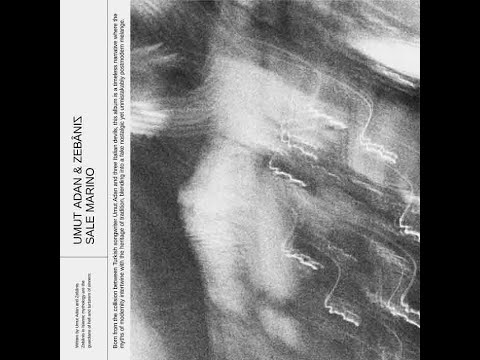
A ferry crossing between Europe and Asia becomes the setting for “Sale Marino”, the new single from Umut Adan & Zebânis released on 3 December on Six Degrees Records. The Istanbul-based project – vocalist Umut Adan, guitarists Andrea Marazzi and Pietro Caramelli, and drummer Michele Bussone – wrote the track whilst drifting across the Bosphorus, transforming the rhythm of that journey into what they describe as the album’s “most psych-folk moment.” The single precedes their full-length Başka Bahar, due on 6 March 2026, and arrives ahead of a UK tour in April with dates in Falmouth, Manchester, Glasgow, Todmorden and London.
Built through meticulous sonic layering, “Sale Marino” opens and closes on a magnetic riff. Between these frames, melodic verses flow over a jazz-tinged bassline, whilst reverb-soaked guitars reference the acoustic phenomenon that occurs in Istanbul when multiple muezzins call from overlapping neighbourhoods: a real-world psychedelia created by stone architecture and air.
The lyrics, written by Adan, follow a narrator who measures their own exhaustion against the city around them. Bodrum appears first, not as a destination but as an idea of ease and pleasure, prompting the narrator to question whether they ever tasted that kind of joy. From there the text settles firmly in Istanbul, where images of a bloodied face, a broken heart, the sting of sea salt and the plainness of unsweetened tea trace the weight of daily life. These details build a portrait of someone worn down by the city’s demands, a feeling reinforced by the repeated questions that run through the verses. The line “Wouldn’t I have wanted to be a lover worthy of you? / But my head is loopy, worn out from yesterday, we’ve come undone in Istanbul” makes that tension explicit, placing personal fatigue and the city’s pressures on the same plane.
Beneath its contemplative surface, the track turns directly toward the pressures and injustices that shape daily life in Istanbul, treating the city’s unrest as part of the movement that carries the narrator through the song. This is the sense the band describe as “unmistakably human”, rooted in experience rather than abstraction. The final verse references to “Ada Sahilleri” a well-known Ottoman-era folk song associated with longing and patience.
Stream and listen to the single HERE