

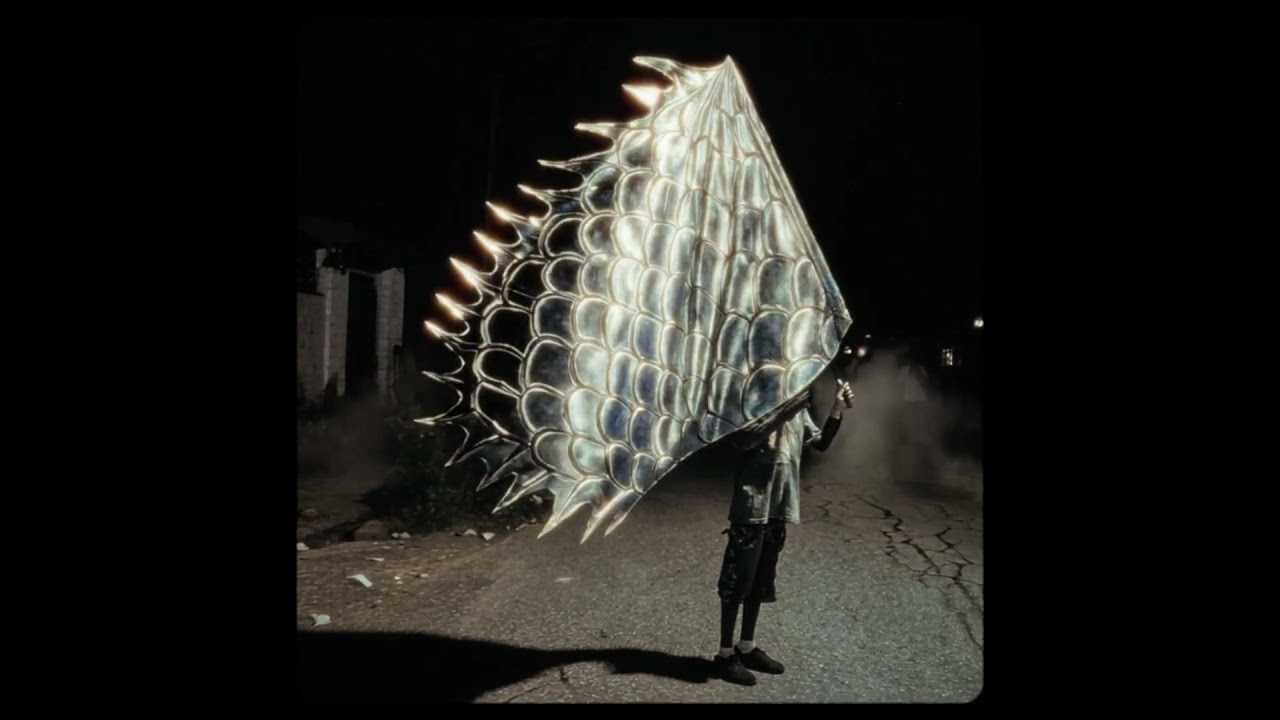
For today’s Daily Discovery we travel to Paris, where 15 15 release “Fāfaru” through S76 as the first single from their debut album Mārara. The full record arrives on 6 March 2026, following a year in which the group supported Kamasi Washington on his Spring 2025 European tour, performed at COLORS – Tones of Paris in October, appeared at Simple Things Festival in Bristol in July, and closed the Fusion Festival main stage in August.
The track takes its name from a traditional Polynesian dish: fish marinated in seawater over several days whose preparation marks the opening of the Taravana festival. In the narrative 15 15 have constructed, fishermen return at dawn while the community gathers at the marina to clean, cut and prepare the catch. Elders teach the younger generation a nursery rhyme retracing the preparation steps, with children joining in chorus, mimicking their tontons and tatis from Luya district.
The song follows this sequence, mixing French and Tahitian in lines such as “C’est le tamara’a / Faut tāpūpū / Le mārara / Pour le fāfaru,” meaning “It’s the meal / You need to mash or prepare / The mārara / For the fāfaru,” which outlines the preparation steps. The refrain “De l’air, donnez lui de l’air / Y’a que des parapara de joie dans son mafatu” translates as “Give it air / There are only small bursts of joy in his heart,” a call voiced during the communal work.
The five-piece core — Julia Dell’Angelo, Tsi Min Siu, Ennio Neagle, Robin Morisse Mac Lean and Marvin Morisse Mac Lean — wrote, composed and produced the single, with additional production from Kevin Bui Keight. A choir featuring family members Taumatairo, Yannick and Nicole Neagle alongside Lyes Kaci and Nathanne Le Corre reinforces the communal character.
“Fāfaru” develops the narrative first introduced in the group’s EPs Ataheva and Saplin, where Mārara appears as a fictional island formed through the actions of five ancestral fishermen. The single places this storyline inside a setting built from synthesisers, bass, percussion, choral writing and analogue timbres, with rhythmic patterns shaped by the group’s mix of electronic production, Polynesian references and ensemble vocals that run through their earlier work.
Stream the single HERE